Before You Go
China 240-Hour Visa-Free Transit Explained
A plain-English explanation of China’s 240-hour visa-free transit policy, including the third-country rule, eligible passports, onward tickets, and official-source cautions.
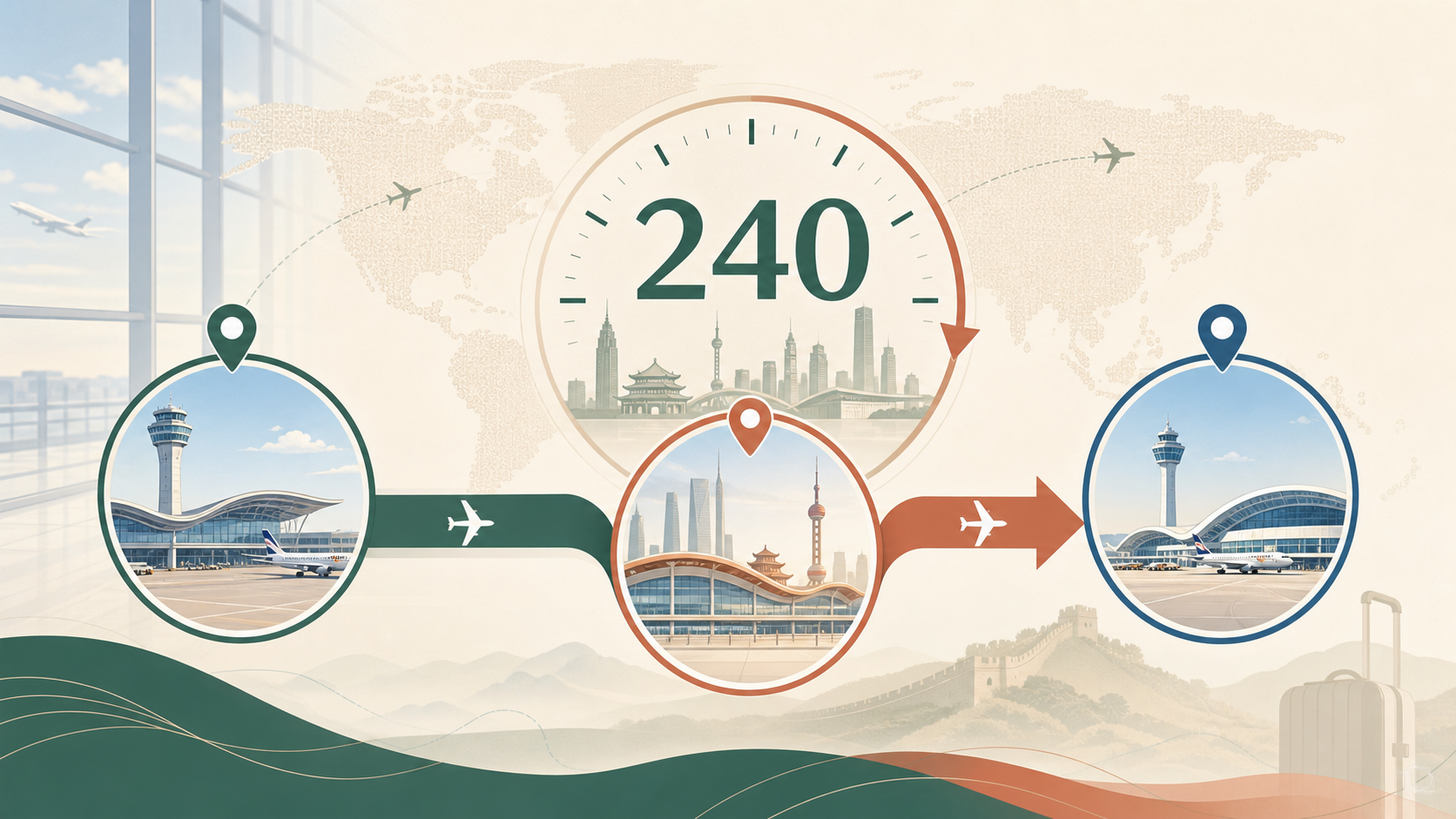
China’s 240-hour visa-free transit policy is one of the most useful entry options for some travelers, but it is also easy to misunderstand. The most important word is transit.
This guide explains the idea in plain English. For final decisions, use the National Immigration Administration notice and official port guidance.
Quick Answer
China’s 240-hour visa-free transit is for eligible passport holders who transit through China to a third country or region, enter through approved ports, stay within permitted areas, and hold a confirmed onward ticket within the allowed time.
It is not a universal 10-day tourist visa-free rule for everyone.
The Core Conditions
In simple terms, you usually need:
- An eligible passport.
- A valid international travel document.
- A route that continues to a third country or region.
- A confirmed onward ticket within the 240-hour window.
- Entry through an approved port.
- Travel only within the permitted stay area.
- A purpose that fits the policy.
The official notice is the backbone. If your route is unusual, check before booking.
The Third Country Or Region Rule
This is where many travelers make mistakes.
A common qualifying pattern is:
Country A → China → Country B
A common risky pattern is:
Country A → China → Country A
Hong Kong, Macao, and Taiwan may be treated as separate regions for transit-route purposes in many official explanations, but you should still confirm your exact route with official or airline sources before travel.
What The 240 Hours Means
The policy is often described as 240 hours, or 10 days. Do not treat this as permission to casually overstay. Your onward ticket and permitted stay calculation matter.
If your flight is delayed or changed, ask airline and immigration staff early. Do not wait until the last minute.
Where You Can Stay
The policy is tied to approved ports and permitted stay areas. You cannot simply enter anywhere and travel anywhere in China under the transit rule.
Some city-level official pages, such as Shanghai’s English portal, provide useful local explanations. Still, the National Immigration Administration should remain the final authority for the national policy.
Activities That May Not Fit
Tourism, transit, business visits, family visits, and similar short stays may be discussed in official policy contexts, but work, study, journalism, or other regulated activities can require a visa.
If your purpose is not ordinary short-term travel, do not rely on transit visa-free entry.
Use The Self-Check Tool Carefully
Our 240-Hour Transit Self-Check can help you screen a route, but it cannot replace border officers or official sources.
Use it as an early warning system:
- “Likely” means your answers match common public conditions.
- “Needs official confirmation” means something is unclear.
- “Not likely” means the route may fail a basic condition.
Common Mistakes
Travelers often misinterpret the 240-hour visa-free transit policy. Avoid these common errors:
-
Treating it as a general 10-day tourist visa-free rule. This is the most common misunderstanding. The policy requires transit to a third country or region. A simple round trip from Country A to China and back to Country A does not qualify.
-
Overstaying because of how days are counted. 240 hours is calculated from the scheduled departure time, not from the moment you walk out of the airport. Some travelers miscount and end up overstaying, which can lead to fines, questioning, and future entry complications.
-
Entering or leaving through an unapproved port. Not all international airports or land border crossings are approved for this policy. Entering through a non-approved port may result in denied entry even if your passport and route are otherwise eligible.
-
Traveling outside the permitted stay area. Each approved port has a corresponding permitted region. You cannot enter through Shanghai and freely travel to Beijing or beyond the designated area without a visa.
-
Not having a confirmed onward ticket. Border officers may ask to see a ticket showing your onward travel to a third country. A refundable or unconfirmed booking may not satisfy their requirements.
-
Assuming the third-country rule has no exceptions. Routes involving Hong Kong, Macao, or Taiwan should be verified with official sources or your airline before departure. Do not assume these count automatically.
-
Relying only on unofficial third-party advice. Conditions change. Check the official NIA notice before every trip, not once and then reusing the same understanding for months.
Check Official Sources Before You Travel
The 240-hour visa-free transit policy is set by China’s National Immigration Administration. Before booking, confirm your route, passport, and ports against the official NIA notice. City-level official portals like Shanghai’s English guide can help with local detail, but NIA is the national authority.
- National Immigration Administration — 240-hour visa-free transit notice
- Shanghai 240-hour visa-free transit guide
- China Travel Made Easy — official source library
Related Guides
Official and platform sources used
- Conditions for Foreign Nationals Applying for 240-Hour Visa-Free Transit Policy National Immigration Administration, Exit and Entry Administration of P.R. China
- Shanghai 240-Hour Visa-Free Transit Guide Shanghai Municipal Government English Portal