A first trip to China runs about ¥4,800-7,000 (budget), ¥7,500-10,500 (mid-range), or ¥15,000+ (comfortable) per person for 10 days, excluding international flights. At the October 2026 rate of about ¥6.72 per US dollar, that’s roughly $720-1,560. Those numbers are useless without knowing where they break down, so this article shows the daily rates, the real ticket prices, the transport costs, and the fees that never appear in guidebook headlines. If you want to run your own numbers against your own route, use our China trip budget calculator after reading this.
The single most expensive mistake first-timers make has nothing to do with hotels or flights. It’s the 3% service fee on foreign-card payments over ¥200, which quietly adds about ¥300 to a ¥10,000 trip. More on that below — no other budget guide covers it.
The short answer: three daily budgets in China
Per person, per day, excluding international flights and intercity transport:
| Tier | Daily total (CNY) | Lodging | Food | Local transport | Attractions |
|---|---|---|---|---|---|
| Budget | ¥350-500 | Hostel bed ¥60-120 or basic hotel ¥150-250 | ¥80-120 | Metro and bus ¥10-30 | Mostly free museums plus 1-2 paid sites |
| Mid-range | ¥700-1,100 | 3-star or business chain ¥300-500 (higher in central Beijing/Shanghai) | ¥150-250 | Metro plus occasional taxi ¥40-80 | ¥100-200 including cable cars and shuttles |
| Comfortable | ¥1,500-2,500 | 4-5 star ¥800-1,500 | ¥300-600 | Taxis and private car ¥100-300 | Everything, plus guides and shows ¥200-400+ |
Two adjustments matter more than the table itself. Traveling as a couple cuts the lodging line by 30-40%, because a ¥400 hotel room split two ways costs each person ¥200. And hotels are the biggest single lever in any tier — lodging eats 30-50% of a daily budget, which is why one week in a central Shanghai hotel can cost more than your airfare on a sale fare.
The tier you pick also decides which version of China you see. A budget trip leans on free city museums (passport as ticket, reservation required) and street food. The mid-range tier buys you the Great Wall with a cable car, hot pot dinners, and hotels near a metro line. The comfortable tier adds private guides, shows, and direct taxis. The difference between tiers is mostly a multiplier on lodging and tickets, not a different country. If you’re choosing how to spend, our guide on how to pay in China as a tourist explains why your payment method decides the final number on every receipt — and if you’re watching the budget hard, the Zhuhai guide shows a second-tier city running ¥150-250 per person per day outside Chimelong days.
What things actually cost inside China
Hotels
A hostel bed runs ¥60-120 in big cities and ¥30-60 in second-tier ones. A basic, clean hotel room is ¥150-350. A comfortable business-chain hotel is ¥300-500, spiking to ¥400-700 in central Beijing or Shanghai, where a five-star starts around ¥800 and goes to ¥1,500+ in prime locations. Expect roughly 30-50% more per night in tier-one cities for comparable quality, and 40-100% more during National Day (Oct 1-7) and Chinese New Year. Book those two windows months ahead or shift your dates.
Food
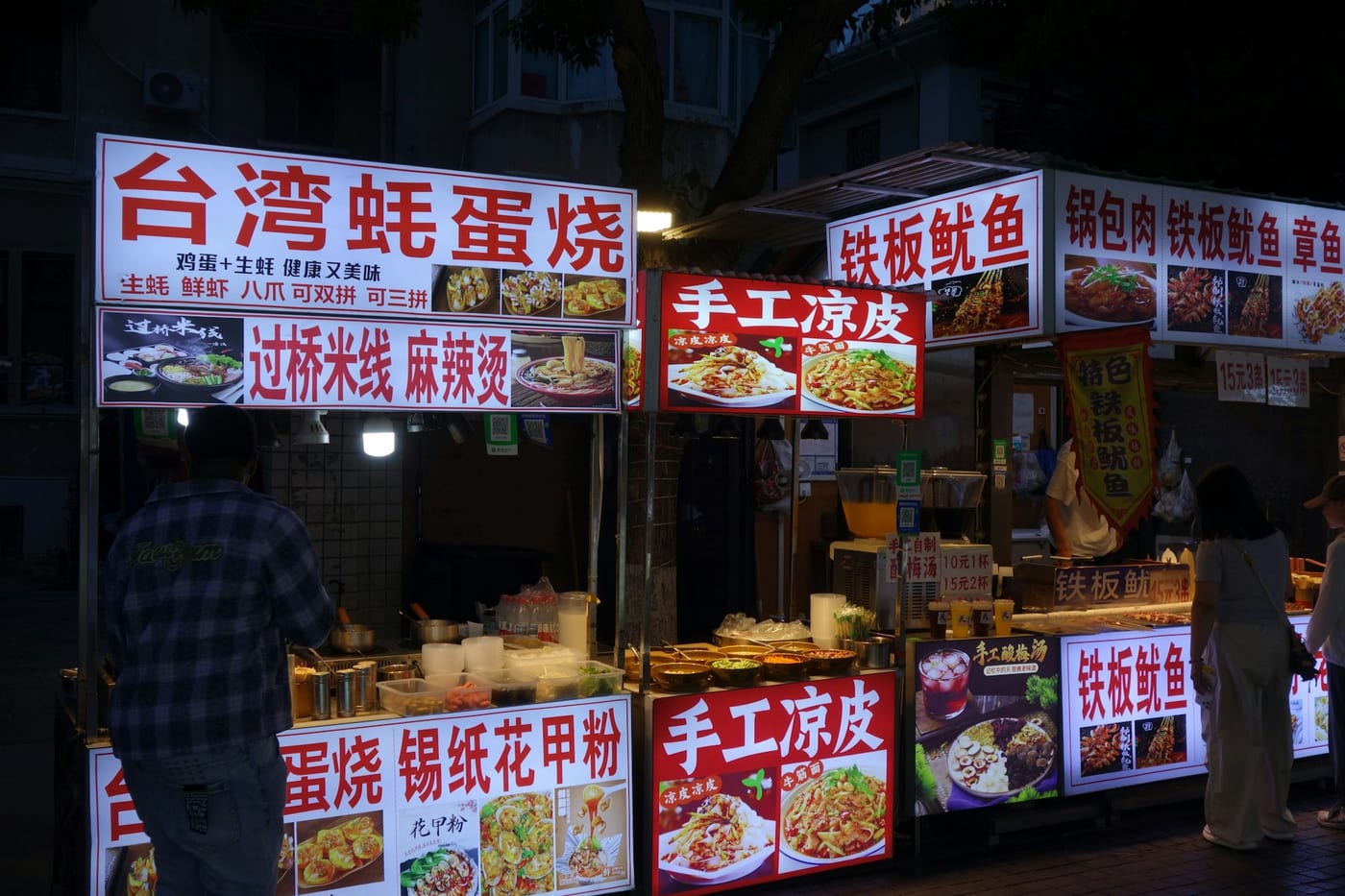
Breakfast from a street stall is ¥8-15. A bowl of noodles is ¥15-30. A canteen-style lunch runs ¥25-40. Hot pot lands at ¥80-130 per person, and a proper restaurant dinner with beer goes past ¥150. Street snacks run $3-6 worth — about ¥20-40 — and will feed you fine. Eating where locals eat is the cheapest good meal in China; eating where English menus with photos are posted costs roughly double. Our what to eat in China guide covers the dishes worth the money.
Local transport
Metro rides are ¥3-7, city buses ¥1-2. A 5-kilometer taxi is ¥20-35 in tier-one cities and ¥12-25 elsewhere. Ride-hailing through Alipay or WeChat is marginally cheaper than street taxis and removes the language problem. Most days you’ll spend ¥10-30 on local transport, and rarely more than ¥80 even on a scattered itinerary.
Attractions
This is where headline prices lie. Official tickets are cheap; the mandatory add-ons inside scenic areas are not:
| Attraction | Gate ticket | Required add-ons | Real cost |
|---|---|---|---|
| Palace Museum, Beijing | ¥60 peak season / ¥40 off-season | Treasure Gallery ¥10, Clock Gallery ¥10 | ¥60-80 |
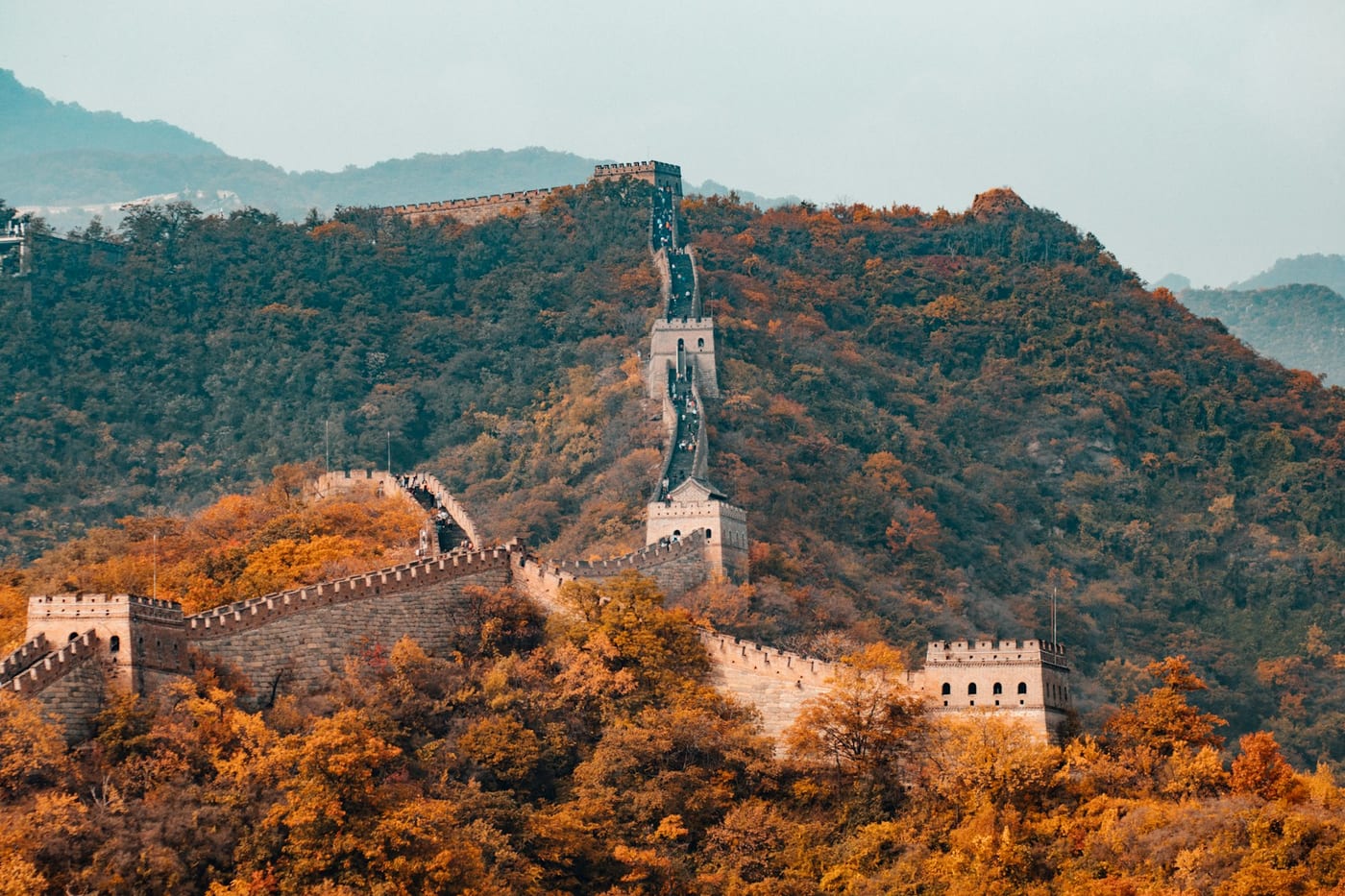
| Mutianyu Great Wall | ¥45 (¥25 students/seniors) | Shuttle ¥15, round-trip cable car ¥140 | ~¥200 |
| Terracotta Warriors, Xi’an | ¥120 (¥60 students) | Free shuttle within the site | ¥120 + ~¥50 transport |
| Chengdu Panda Base | ¥55 (¥27 students) | Sightseeing bus ¥30 | ~¥85 |
| Li River cruise, Guilin-Yangshuo | ¥215 (3-star, includes ¥54 park fee) | 4-star ¥360; ferry-terminal transfer extra | ¥215-360 + transport |
| Yulong River bamboo raft | ¥100-160 per person per raft | E-bike rental ¥30-50/day | ¥100-160 |
| City museums | Free | Reservation with passport | ¥0 |
Mutianyu is the clearest example: the ¥45 ticket is real, but the shuttle and cable car add ¥155, and almost nobody walks down off the wall. The real price is about ¥200, roughly 4.4 times the headline. The Li River’s ¥215 cruise ticket doesn’t get you to the ferry terminal, either. Budget every attraction as gate ticket plus the transport the site requires. Details for each city sit in our Beijing, Xi’an, Chengdu and Guilin guides.
Getting between cities: trains, flights and what they cost
Second-class high-speed rail, checked against 12306 data in October 2026:
| Route | Second class | Duration |
|---|---|---|
| Beijing South - Shanghai Hongqiao | ¥498-672 | 4.5-6h |
| Beijing West - Xi’an North | ¥470-618 | 4-5.9h |
| Xi’an North - Shanghai Hongqiao | ¥652-782 | 6-8.5h |
| Shanghai Hongqiao - Hangzhou East | ¥57-87 | 45min-1h |
| Guangzhou South - Guilin | ¥176-260 | ~2-2.7h |
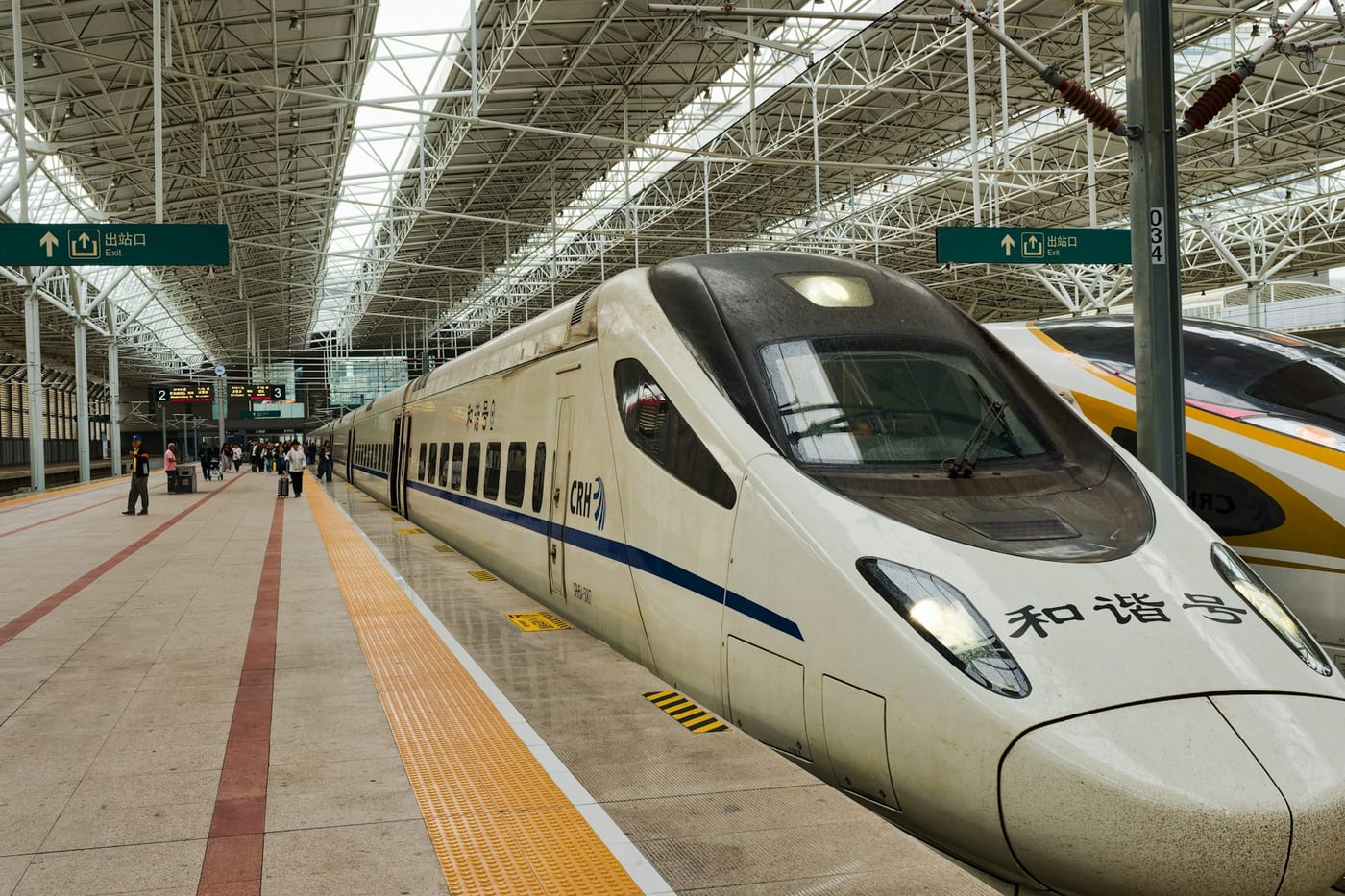
Sleeper trains are the quiet budget hack: a Beijing-Xi’an sleeper berth runs ¥373-650 and replaces both a train and a hotel night. On routes over five or six hours, discount flights often beat rail — Shanghai to Guilin is 7+ hours and ¥705+ by train, while off-peak one-way fares run ¥450-600. Book trains 15 days ahead on 12306 with your passport; the full walkthrough is in our guide on booking high-speed train tickets as a foreigner.
City prices: where your money goes further
| Item | Tier-one (Beijing, Shanghai) | Second-tier (Xi’an, Chengdu, Guilin) |
|---|---|---|
| Hostel bed / night | ¥60-100 | ¥30-60 |
| Comfortable hotel / night | ¥400-700 | ¥250-450 |
| Mid-range restaurant per person | ¥80-150 | ¥50-90 |
| Taxi, 5 km | ¥20-35 | ¥12-25 |
| Coffee | ¥25-40 | ¥15-30 |
Beijing and Shanghai cost more mainly in hotels. Xi’an and Chengdu deliver the best value per day — ¥30-50 feeds you well near the Muslim Quarter in Xi’an, and a Chengdu teahouse costs ¥20-30. Guilin and Yangshuo are cheap until you enter scenic areas, where cable cars, rafts and shuttles pile on. Guangzhou and Zhuhai eat better for less than the north. Still deciding on a route? Our Beijing, Shanghai, Chengdu or Chongqing comparison and the best places to visit on a first trip list break down the tradeoffs.
The full bill: 7, 10 and 14 days, worked out
Three concrete routes, mid-range, per person, excluding international flights:
7 days — Beijing (4 nights) + Xi’an (2 nights), about ¥5,700 (range ¥4,800-7,000)
| Item | Cost |
|---|---|
| Hotels | ¥2,300 |
| Food | ¥1,260 |
| Local transport | ¥350 |
| Attractions | ¥450 |
| Rail (Beijing-Xi’an round trip) | ¥1,174 |
| eSIM | ¥150 |
10 days — Beijing (3) + Xi’an (2) + Shanghai (3), about ¥7,700 (range ¥6,500-10,500)
| Item | Cost |
|---|---|
| Hotels | ¥3,400 |
| Food | ¥1,800 |
| Local transport | ¥500 |
| Attractions | ¥540 |
| Rail (both legs) | ¥1,287 |
| eSIM | ¥200 |
14 days — Beijing (3) + Xi’an (2) + Chengdu (3) + Guilin/Yangshuo (3) + Shanghai (2), about ¥11,200 (range ¥9,500-14,500)
| Item | Cost |
|---|---|
| Hotels | ¥4,850 |
| Food | ¥2,520 |
| Local transport | ¥700 |
| Attractions | ¥910 |
| Rail (four legs) | ¥1,952 |
| eSIM | ¥250 |
That’s about $850, $1,150 and $1,670 at ¥6.72/USD. The budget tier comes in at roughly 60-70% of these mid-range totals; the comfortable tier roughly doubles them. The 10-day route matches our 10-day first-time itinerary almost line for line, and if your style is slower or faster, the itineraries by travel style roundup adjusts the same math.
The five costs first-timers always miss
1. Visa and entry paperwork. A single-entry Chinese visa for US citizens costs $140, with a $25 expedite option, through at least December 31, 2026. Many nationalities — most of Western Europe among them — enter visa-free instead, so check before you pay. The free digital arrival card still has to be completed before you land. Start with our visa-free travel guide, the 240-hour transit rules, and the pre-flight checklist.
2. Payment friction. This is the one nobody budgets for. When you link a foreign card to Alipay or WeChat Pay and scan a QR code, transactions under ¥200 are typically fee-free, but a single payment over ¥200 carries a 3% service fee on the whole amount. Rules differ slightly between the two apps and have shifted repeatedly — confirm the current terms in the app’s payment screen before big purchases. On a ¥10,000 trip paid entirely by foreign card, that’s about ¥300 gone. The workaround: use fee-free channels (some third-party wallets and UnionPay-issued cards avoid the platform fee entirely), keep small daily purchases under ¥200, and pay hotels, cruises and rail tickets through the fee-free route. Airport currency desks charge 3-5% worse than ATM rates, so carrying cash doesn’t rescue you either — and cash above ¥20,000 per person isn’t allowed in. Step-by-step setup lives in our guides on Alipay and WeChat Pay; WeChat Pay vs Alipay for tourists compares the fees, Apple Pay and Google Pay mostly won’t work, and foreign credit cards only swipe at larger hotels and malls. If you’re weighing cash at all, read do you need cash in China.
3. Attraction add-ons. The shuttle at Mutianyu is ¥15. The round-trip cable car is ¥140. The Panda Base bus is ¥30. The Yulong River e-bike is ¥30-50. None of these appear in the ¥45 or ¥55 headline prices, and each one is effectively mandatory. Assume every headline ticket is a floor, not a ceiling.
4. Connectivity and adapters. A week of tourist eSIM data runs about $11.5-35 depending on provider and data cap; airport SIM counters charge 20-40% more than buying online. A commercial VPN costs $3-15 a month, though an eSIM routed through Hong Kong or Singapore usually removes the need for one entirely — see our eSIM comparison and VPN guide. China runs 220V/50Hz with Type A, C and I sockets, so a plug adapter runs ¥20-50 ($3-8). Your phone’s charging brick handles the voltage; the plug shape is the only problem.
5. Seasonal surge. National Day and Chinese New Year push hotel rates 40-100% up in affected cities, and the same trip can cost 20-50% more in high season overall. December through March (outside Spring Festival) runs 20-30% below the annual average, with January in the north down 30-50%. Early-to-mid November and March are the value windows.
Is China expensive? An honest comparison
Against mid-range daily averages elsewhere, China sits at ¥400-800 versus roughly ¥10,000-18,000 in Japan, €120-250 in Western Europe, and ¥200-450 in Southeast Asia. Food is where the gap is starkest: a table for two runs ¥70-160 in China against ¥280-430 in Japan. The honest answer to “is China expensive” is no — the friction is the real cost of a first trip. Setting up payments, booking reservations in Chinese, and navigating the app ecosystem eat more of your attention than your wallet.
How to keep the total under control
Six habits, in rough order of impact. Stay in fewer cities — each extra stop costs a rail ticket plus a transfer day’s hotel. Travel in early November or March. Take rail for legs under five hours, fly for anything longer. Eat at places without English menus. Route big payments through the fee-free channel. Reserve popular sites early: the Palace Museum releases tickets seven days out at 20:00, and the Panda Base opens booking fourteen days ahead with a daily cap of 85,000 visitors. If you want the full list of what goes wrong, our common first-trip mistakes guide collects them.
FAQ
How much does a trip to China cost?
Ten days mid-range, excluding flights, runs ¥7,500-10,500 per person — about $1,100-1,560. Budget travelers land at ¥4,800-7,000; comfortable trips start near ¥15,000.
How much money do I need per day in China?
Plan on ¥350-500 for a hostel-and-street-food trip, ¥700-1,100 mid-range with 3-star hotels and paid attractions, or ¥1,500-2,500 for four-star hotels, taxis and private guides. Second-tier cities shave ¥100-200 off the mid-range line.
Is China expensive for tourists?
Not by global standards. Mid-range daily costs run well below Japan or Western Europe, and street food is a fraction of equivalent meals elsewhere. The expensive part is payment friction and advance bookings, not prices.
How much does a 10-day trip to China cost?
The Beijing-Xi’an-Shanghai route works out to about ¥7,700 mid-range, within a ¥6,500-10,500 range depending on hotel tier and season. The full itemization is in the table above.
How much is a China visa?
US citizens pay $140 for a single-entry visa ($165 with expedite). Many European and other nationalities travel visa-free; confirm your status on the official channels before budgeting anything.
Do you tip in China?
No. Tipping isn’t expected anywhere in China, so don’t build it into your budget. The rare exception is a voluntary thank-you to a guide or performer, which is never required.
How much cash should I bring to China?
¥500-1,000 as a backup is plenty. Most places take QR payments, ATMs are widely available, and airport exchange desks cost 3-5% more than a bank ATM. Don’t exchange a large stack before departure.
Is China cheaper than Japan?
Yes, meaningfully. Train fares, hotels and especially restaurants are cheaper in China — a restaurant table for two costs roughly a third to a half of the Japanese equivalent for comparable food.
The bottom line
For a first 10-day trip, plan on about ¥800 per day all-in at mid-range — ¥7,500-10,500 excluding flights — and treat payment setup as part of the budget, not an afterthought. Three moves will tighten the number more than any packing hack: run your dates and cities through the budget calculator before booking, lock your route with the 10-day itinerary, and complete the pre-flight checklist so your cards are bound and your reservations are made before you land.
Prices checked October 2026. Attraction tickets, train fares and fees change — confirm current rates before you travel. USD conversions at about ¥6.72/USD.
Photo credits: All images from Unsplash under the Unsplash License (free for commercial and non-commercial use, attribution appreciated). Hero (Nanjing Road, Shanghai) by Fenghua; street food by MChe Lee; high-speed rail by Eric Prouzet; Great Wall by Unsplash; Suzhou street by Jakub Tomasik. Photographer pages: unsplash.com/photos/poCTkCXKVFY, jIx99pMnnWM, u_mFUO4V3HI, _8EFj6ISA08, kI46x8UpA4M.