Guangzhou is often overlooked by first-time visitors who default to Beijing or Shanghai. That is a mistake. As one of China’s most open and foreigner-friendly cities, it offers a warmer climate, incredible Cantonese food, and a relaxed pace — without sacrificing modern city conveniences.
Quick Answer
If you want great food, warm weather, and a Chinese city that feels less overwhelming than Beijing or Shanghai — at prices that feel like a bargain for a tier-1 city — start with Guangzhou. The metro is extensive, international flights are direct, the food culture is world-famous, and central districts carry plenty of English signage. Locals plan whole days around eating, and the city is built to let them.
Why Guangzhou Over Beijing or Shanghai?
Guangzhou is arguably the best-value tier-1 city in the world for travelers: big-city infrastructure — world-class metro, international airport, English signage — at prices closer to a second-tier city.
- Cost: Hotels, food, and transport cost 30–50% less than Shanghai or Beijing for comparable quality. A dim sum session costs ¥50–150/person. Street food starts at ¥10.
- Food: Cantonese cuisine is one of China’s great food traditions — light, fresh, and umami-driven rather than heavy or oily. Dim sum, roast goose, wonton noodles, congee, beef hotpot, and late-night street food.
- Pace: The slowest of China’s tier-1 cities. Parks fill with elderly musicians, chess players, and morning tai chi. The Pearl River promenade is built for strolling.
- Foreigner-friendly: Canton Fair legacy means hotel, restaurant, and metro staff are used to foreign faces.
- Climate: Subtropical, green year-round. Winter temperatures rarely drop below 10°C (50°F). Lychee, longan, mango, papaya, and dragonfruit in season.
- Transit hub: Baiyun Airport is a major visa-free transit port. High-speed trains reach Hong Kong (from 47 minutes) and Shenzhen (about 30 minutes).
When to Visit
- Mid-October to early December is the best window. Days run roughly 16–28°C and humidity finally drops. One catch: the autumn Canton Fair fills hotels from mid-October to about 4 November (see below), so early December is the quiet version of the same weather.
- January and February are the sleeper pick. At roughly 10–20°C with dry air, winter here is what northerners fly south for — a light jacket is enough. Expect crowds and higher prices during Chinese New Year week, when the city’s flower markets are at their best.
- March to mid-April is huinantian season. “Returning south” weather pushes humidity above 90%: floors turn damp, clothes will not dry, views haze over. Temperatures are mild (roughly 15–26°C), but pack quick-dry clothes.
- May to September is hot, wet, and typhoon-prone. Highs sit around 30–34°C with heavy afternoon thunderstorms; July and August carry the highest typhoon risk, which can delay flights for a day or two. If you come in summer, plan indoor mornings and eat late.
Where to Stay
-
Tianhe District — Modern business center with international hotels and shopping malls. Best for comfort and English-speaking service.
-
Yuexiu District — Old city center with history, parks, markets, and authentic food at every corner. Best for culture and local vibes.
-
Haizhu District — A balance of modern and traditional along the Pearl River, more affordable.
-
Liwan District — The old west side: arcade streets, Yongqing Fang, Shamian Island, and the densest concentration of old Cantonese food. Best for atmosphere, weakest for large international hotels.
A practical rule: pick a room within a five-minute walk of a metro station on Line 1, Line 2, or Line 6 — almost everything in this guide sits on or near those three lines. If you are in town for the Canton Fair, book months ahead; the whole city’s hotel pricing moves with the fair calendar.
6 Things First-Timers Should Do
1. Walk Shamian Island
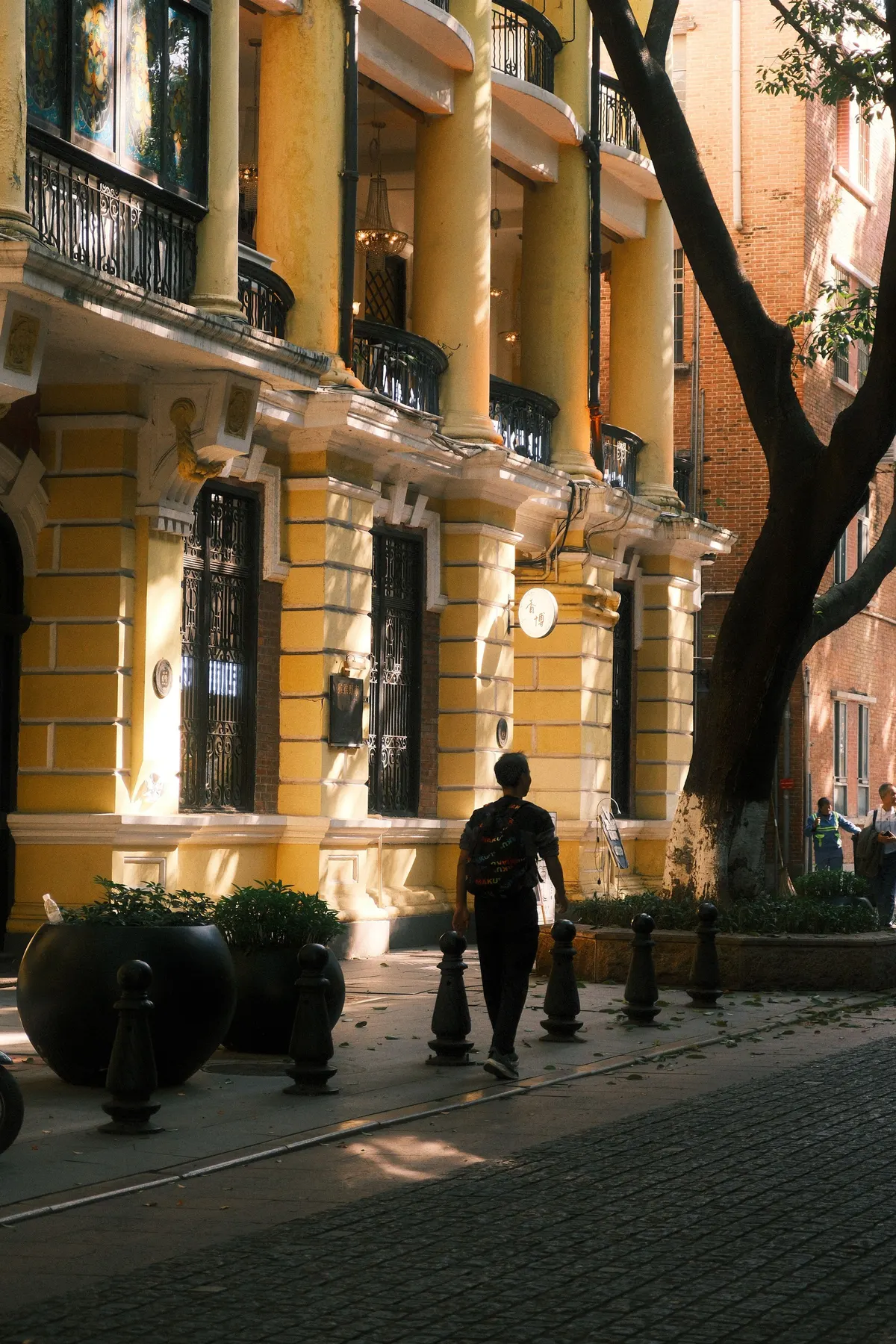
Shamian Island is a quiet, tree-lined former colonial concession with European-style buildings, cafes, and riverside paths. It is the most walkable neighborhood in Guangzhou, and entry is free.
Come early if you want the streets to yourself. By late morning the island fills with wedding photographers, skating children, and tour groups drifting between the cathedral, the old customs house, and the riverside benches.
Metro: Line 1 Huangsha (黄沙站) Exit F, or Line 6 Cultural Park (文化公园站) Exit A. 5-minute walk from either.
2. Eat Dim Sum at a Traditional Tea House
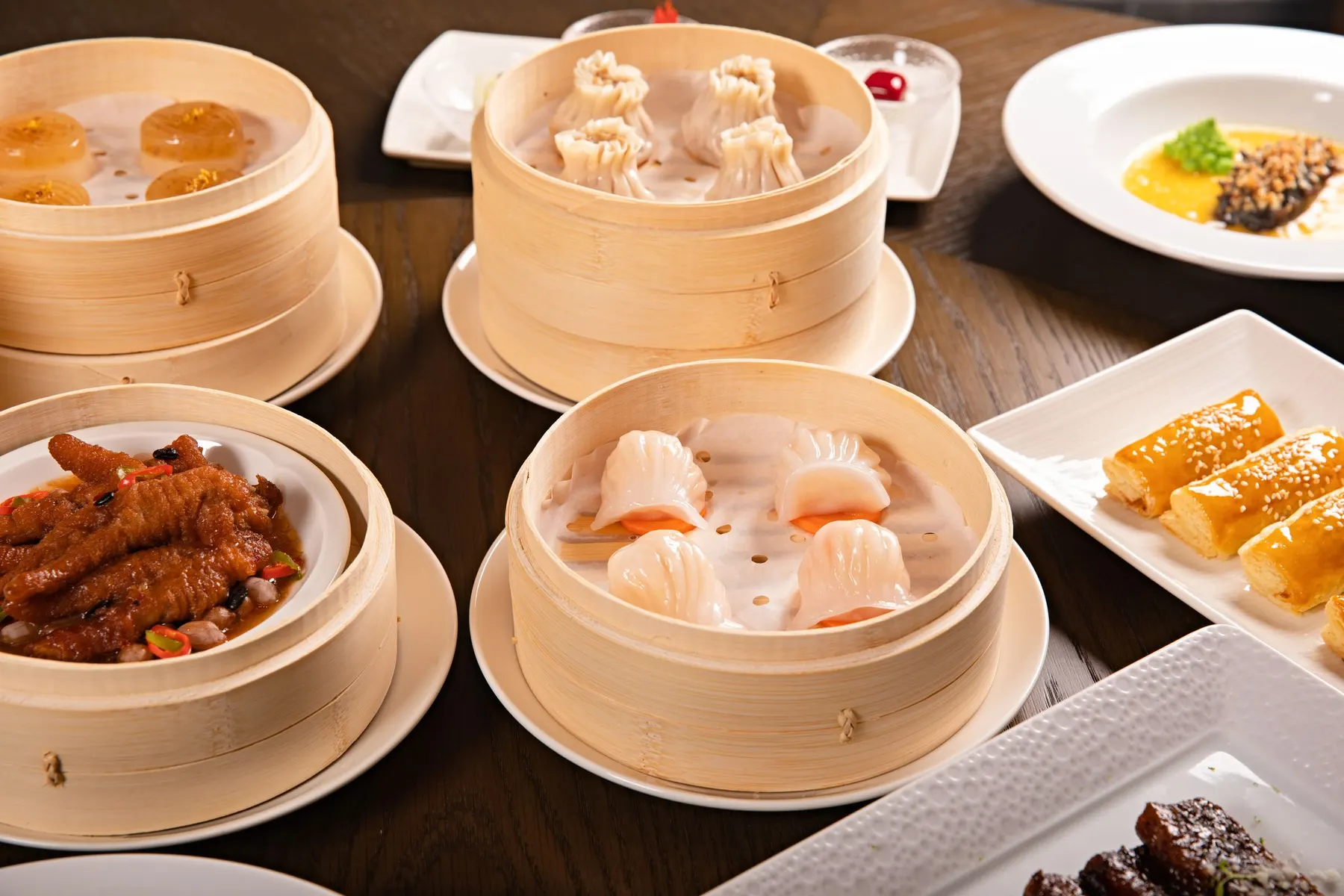
Guangzhou is the birthplace of dim sum (yum cha). Go to a traditional tea house in the morning, order a pot of pu’er tea, and try har gow (shrimp dumplings), siu mai (pork dumplings), char siu bao (BBQ pork buns), and cheung fun (rice noodle rolls). Ordering by pointing or using a translation menu is common. A session in a neighbourhood tea house runs about ¥50–90 per person; the century-old names in Liwan land closer to ¥100–150, plus a tea charge of ¥3–15 per head (tea charges must be listed by law as of 2026).
3. Visit Chen Clan Ancestral Hall
One of the best-preserved examples of traditional Lingnan architecture in Guangzhou. The detailed carvings, ceramics, and layout tell the story of Guangdong’s craft heritage. It is compact, centrally located, and easy to explore in an hour.
Look up as much as you look around. The roof ridges carry ceramic figurines, the beams are carved with opera scenes, and the compound was built as a clan academy rather than a temple. It now doubles as a folk-craft museum, so the visit rewards an unhurried hour.
Metro: Line 1 / Line 8 Chen Clan Academy (陈家祠站) Exit D. The entrance is directly across from the station. ¥10 admission.
4. See Canton Tower at Night
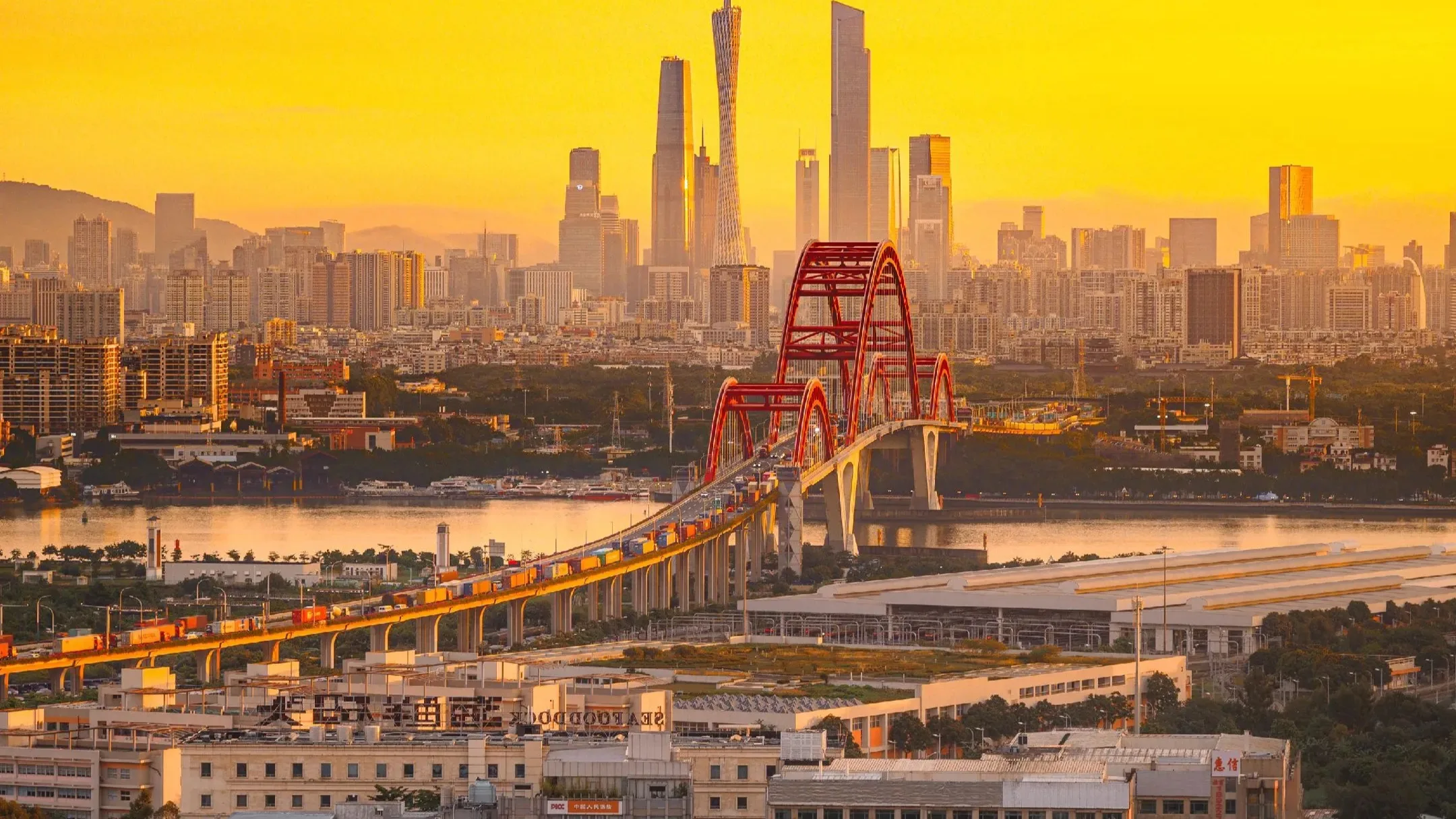
Guangzhou’s most recognizable landmark lights up at night. Walk the Pearl River promenade from Canton Tower to Haixinsha Island for the CBD skyline view. Going up is worth it on a clear day: tickets start at about ¥150 for the indoor 428–433 m observation decks and run to roughly ¥228–398 for higher outdoor decks and ride combos — confirm current prices on the tower’s official channels.
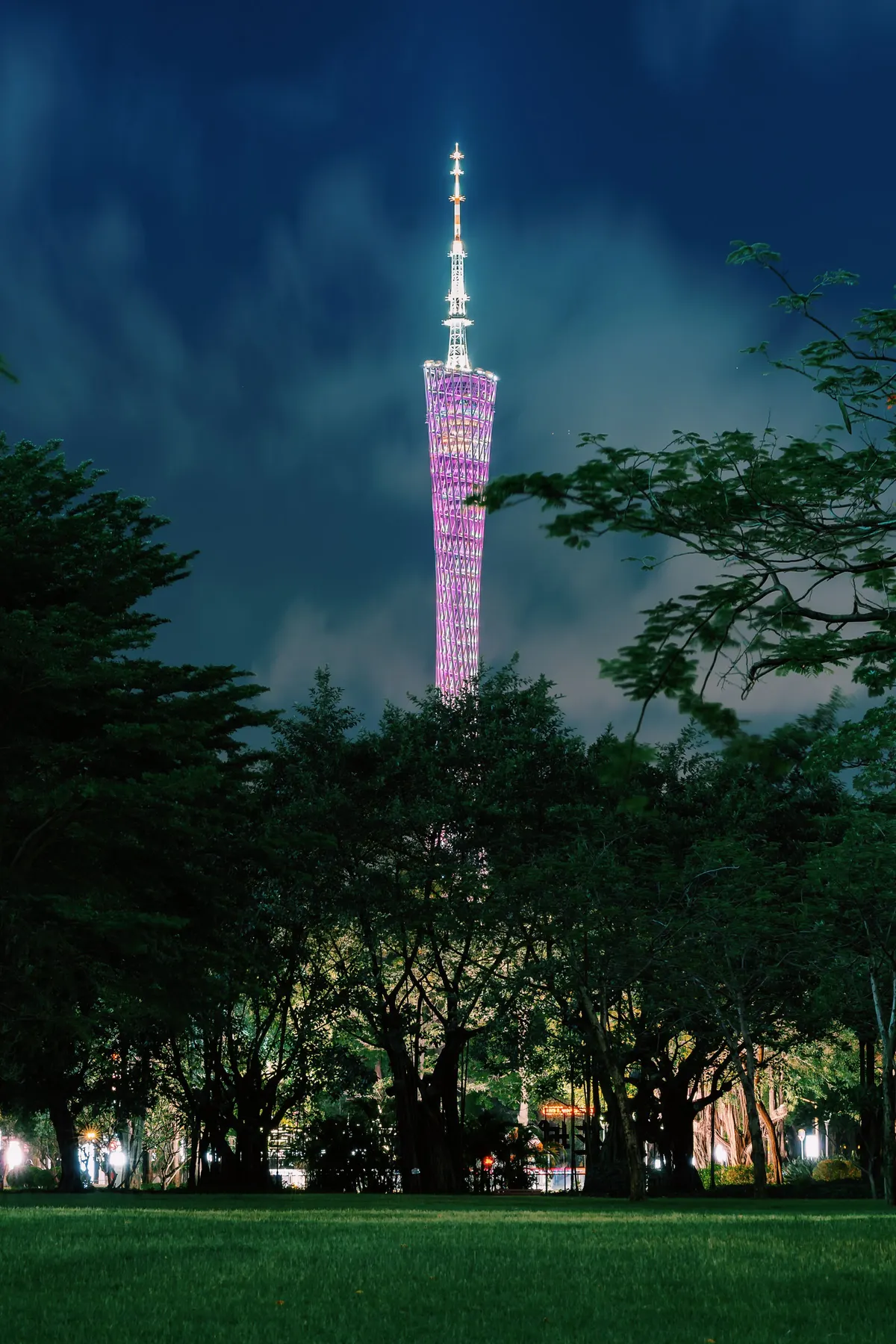
Metro: Line 3 / APM Canton Tower (广州塔站) Exit A. The APM is a driverless train — ride at the very front for a tunnel pilot’s-eye view.
5. Explore Yuexiu Park
A large central park with the Five Rams Statue (the symbol of Guangzhou), old city wall sections, and the Guangzhou Museum inside Zhenhai Tower. Good for a relaxed morning walk.
Metro: Line 2 Yuexiu Park (越秀公园站) Exit B1. Free entry.
6. Try Street Food on Beijing Road
Beijing Road Pedestrian Street is the commercial heart of old Guangzhou. The main street is modern shopping, but the side alleys contain food stalls selling rice noodle rolls, fish balls, roasted skewers, herbal tea, and late-night snacks. Dafo Temple (大佛寺) behind the shopping street lights up at night.
Do not eat only on the main strip. The best-value bowls are one or two lanes back, where the rent is cheaper and the customers are locals. Look for a shop with a queue at an odd hour — that is usually the reliable signal in a Cantonese neighbourhood.
Metro: Line 1 / Line 2 Gongyuanqian (公园前站) Exit D, or Line 6 Beijing Road (北京路站) Exit B. The temple is a 3-minute walk north of the pedestrian street.
One-Day Guangzhou City Walk Route
If you only have one full day in Guangzhou, this is the route Xiaohongshu (RED) bloggers and local guides recommend. It covers old and new Guangzhou in one walkable line — no backtracking, all connected by metro and walking.
| Time | Stop | Metro | What to Do |
|---|---|---|---|
| 8:30–9:30 | Sacred Heart Cathedral | Line 6 Yide Road (一德路站) Exit A | All-granite Gothic cathedral, nicknamed “Notre Dame of the Far East.” Morning light through the stained glass is stunning. Closed Mondays. |
| 9:45–11:15 | Shamian Island | Line 1 Huangsha (黄沙站) Exit F, or Line 6 Cultural Park (文化公园站) Exit A | 150+ century-old European buildings on tree-lined avenues. The mint-green former Soviet Consulate is the photo favorite. |
| 11:30–13:00 | Yongqing Fang | Line 1 / Line 6 Huangsha (黄沙站) Exit C, walk south via Enning Road | Heritage district turned creative hub. Walk Enning Road’s arcade street, see the Moon Bridge, visit Bruce Lee’s ancestral home, and step inside the Cantonese Opera Museum (free). |
| 13:00–14:00 | Shangxiajiu / Enning Road | Line 1 Changshou Road (长寿路站) Exit A, or walk from Yongqing Fang (10 min) | Lunch break. Stop at 陈添记 (Chen Tian Ji) for crispy fish skin, or 吴财记 (Wu Cai Ji) for wonton noodles in a century-old house. |
| 15:00–16:30 | Chen Clan Ancestral Hall | Line 1 / Line 8 Chen Clan Academy (陈家祠站) Exit D | The finest Lingnan architecture in the city, covered in carvings. ¥10 admission. |
| 16:30–18:00 | Beijing Road | Line 1 / Line 2 Gongyuanqian (公园前站) Exit D, or Line 6 Beijing Road (北京路站) Exit B | Walk over the glass-covered Song Dynasty street ruins. At dusk, Dafo Temple (大佛寺) behind the shopping street lights up. |
| 19:00–21:00 | Canton Tower / Haixinsha | Line 3 / APM Canton Tower (广州塔站) Exit A | Walk the Pearl River promenade for the full CBD skyline view. The light show runs every evening. |
Practical tips for this route:
- Budget: ¥80–150/person total (food + transport). All attractions except Chen Clan Hall (¥10) are free.
- Footwear: You’ll walk 15,000–20,000 steps. Flat shoes are essential.
- Best days: Weekdays are noticeably quieter. On weekends, start at 8:00 AM to beat the crowds at the cathedral.
- Metro: Buy a day pass (¥20) or use an Alipay transport mini-program.
- Rain plan: Duck into the Cantonese Opera Museum, Zhongshuge bookstore, or 1200bookshop (a 24-hour indie bookstore).
This route works equally well as a structure for a 2–3 day trip — slow down, spend more time eating, and add Dongshankou or Baiyun Mountain on extra days.
Food Guide: What to Eat in Guangzhou
This is the real reason to visit Guangzhou. Cantonese cuisine is one of China’s great food traditions.
| Must-Try | What It Is | Where to Find It |
|---|---|---|
| Dim Sum (yum cha) | Steamed and fried small dishes served in bamboo baskets | Any traditional tea house, especially in Yuexiu and Liwan |
| Roast Goose | Crispy-skinned roasted goose, sliced and served with plum sauce | Cantonese BBQ shops (look for hanging meats in the window) |
| Wonton Noodles | Shrimp wontons with thin egg noodles in clear broth | Street-side noodle shops, especially in old city areas |
| Cheung Fun | Silky rice noodle rolls with beef, shrimp, or BBQ pork filling | Breakfast stalls and dim sum restaurants |
| Congee | Silky rice porridge with fish, pork, or century egg | Street-side breakfast spots |
| Herbal Tea | Traditional Cantonese cooling tea, slightly bitter | Herbal tea shops (look for copper pots) |
| Beef Hotpot | Fresh-sliced beef, hand-pounded beef balls, light broth | Chaoshan-style beef hotpot restaurants (look for open kitchens with hanging meat) |
| Cantonese Stir-Fry | Quick wok-fired dishes at high heat — sweet and sour pork, stir-fried seasonal greens, steamed fish | Local Cantonese restaurants and dai pai dong (open-air food stalls) |
The Beef Hotpot Experience
If dim sum is Guangzhou’s morning ritual, beef hotpot (牛肉火锅) is its evening obsession. This is Chaoshan-style hotpot — wildly popular in Guangzhou and unlike anything in Western Chinese restaurants.
Here’s how it works:
- The broth is light, not spicy. Just water, ginger, and a few herbs. The point is to taste the beef, not the soup base.
- Beef is sliced fresh to order. Good restaurants hang whole cuts in an open kitchen window. Each cut has a name and a recommended cooking time, usually 8–15 seconds.
- Hand-pounded beef balls (手打牛肉丸) are the signature item — dense, bouncy, made by hammering fresh beef with a heavy wooden mallet until it becomes a paste.
- The sauce bar is self-serve. The classic mix: soy sauce + satay sauce + garlic + cilantro + a touch of chili.
- Finish with rice noodles in the beef-enriched broth.
A good beef hotpot meal costs ¥80–120/person — the same meal in a Western Chinatown costs two to three times as much.
Why Cantonese Cuisine Is Different
If you have only eaten “Chinese food” in the West, Cantonese food in Guangzhou will surprise you:
- Light, not heavy. Seasoning is restrained — salt, ginger, scallion, and light soy are the workhorses. No heavy chili, no Sichuan peppercorn numbness.
- Freshness is everything. Seafood tanks are standard in restaurants — you pick your fish while it’s still swimming. Vegetables are seasonal and often simply blanched with oyster sauce.
- Umami over heat. The flavor profile favors sweetness from fresh seafood, caramelized soy, and slow-cooked broths. Even barbecue (siu mei) emphasizes crispy skin over spicing.
- Soup culture. Cantonese families drink soup daily — slow-simmered for hours with herbs, bones, and dried ingredients.
For foreigners who find Sichuan or Hunan food too oily or spicy, this is the easiest entry point into Chinese food culture.
What a Guangzhou Trip Actually Costs
Guangzhou’s headline appeal is that tier-1 infrastructure comes at second-tier prices: almost every sight in this guide is free, and the money goes into food and the occasional skyline ticket.
| Item | Typical price |
|---|---|
| Canton Tower admission | from about ¥150 (433 m decks); ¥228–398 higher decks and ride combos |
| Chen Clan Ancestral Hall | ¥10 (half price for students) |
| Guangzhou Museum / Zhenhai Tower | ¥10; Yuexiu Park itself is free |
| Shamian Island, Yongqing Fang, Beijing Road, Sacred Heart Cathedral | free |
| Morning tea / dim sum | ¥50–90 per person; ¥100–150 at the old names |
| Chaoshan beef hotpot | ¥80–120 per person |
| Metro | ¥2–14 per ride by distance |
| Taxi | ¥12 for the first 3 km, then ¥2.6/km; peak hours can add up to 30% |
| Shared bike | roughly ¥1.5 per 30 minutes |
| Baiyun Airport to downtown | Metro Line 3 about ¥7, 40–60 min; night airport bus ¥20–35; taxi ¥120–180 |
| Guangzhou South to Hong Kong West Kowloon | second class ¥215 on most trains (¥187 on a few), 47 min to 1 h 20 min |
| Pearl River night cruise | from about ¥98 |
Daily budget. Budget travellers — simple room, noodle-shop breakfasts, metro everywhere — get by on roughly ¥300–450 a day. A mid-range trip (hotel around ¥450–700 a night, proper yum cha, a hotpot dinner, occasional taxis) lands around ¥600–950. That sits a notch above Zhuhai and clearly below Beijing or Shanghai. Canton Tower tickets and the Pearl River cruise are extras.
What costs nothing. Shamian Island, Yuexiu Park and the old city wall, Yongqing Fang, the Cantonese Opera Museum, the Sacred Heart Cathedral, Dafo Temple, and the Pearl River promenade.
Prices were checked in October 2026 and move with the seasons — confirm current fares on official channels or in the booking app on the day.
How Many Days Do You Need in Guangzhou?
For a first visit, three days is the comfortable answer.
Two days covers the essentials: one day for Shamian Island, Yongqing Fang, and Chen Clan Ancestral Hall, and one day for Beijing Road, Yuexiu Park, and an evening on the Pearl River. That leaves no room for the thing Guangzhou is actually good at — long, slow meals.
Three days lets you add a proper morning tea house session, an afternoon in a park, and one dinner that runs far later than you planned. Four days opens up Dongshankou’s heritage cafes, Baiyun Mountain, or a day trip to Foshan.
If Guangzhou is your only Chinese city, give it four days. If it is one stop on a longer trip, three is the sweet spot.
A Simple Three-Day Guangzhou Plan
Day 1: Old Guangzhou on foot
Start at Chen Clan Ancestral Hall in the morning, walk or ride one stop to Yongqing Fang for the arcade streets and the Cantonese Opera Museum, then cross to Shamian Island for the late afternoon. Finish with dinner in Liwan — the city’s best food district.
Day 2: Parks, shopping streets and the river
Yuexiu Park in the morning for the Five Rams Statue and the old city wall, Beijing Road at midday for the Song Dynasty street ruins under glass, Dafo Temple at dusk, then the Pearl River promenade toward Canton Tower.
Day 3: Eating, slowly
Use the third day for a proper yum cha breakfast that runs to late morning, a herbal tea stop, one museum or a long park walk, and a Chaoshan beef hotpot dinner. The meals are the itinerary.
Day Trips and Easy Add-Ons
Guangzhou works well as a base for day trips.
- Foshan — 30 minutes by metro or train. The Ancestral Temple, Cantonese opera heritage, and a slower old-town feel.
- Shenzhen — 30 minutes by high-speed train. Worth it if you want a much newer Chinese city for half a day.
- Hong Kong — from 47 minutes on the high-speed rail to West Kowloon, or three to five hours by cross-border coach (about HK$85–120). Check passport and visa requirements for your nationality before booking.
- Baiyun Mountain — inside the city, with a cable car and a wide view over the Pearl River Delta on clear days.
What the Canton Fair Does to Your Trip
Guangzhou hosts the Canton Fair (China Import and Export Fair) at the Pazhou complex in Haizhu District twice a year, and it is the biggest disruptor of hotel prices and transport in the city — bigger than any public holiday.
- Spring session: three phases — roughly 15–19 April, 23–27 April and 1–5 May.
- Autumn session: roughly 15–19 October, 23–27 October and 31 October–4 November. (These are the 2026 dates published by the fair’s organisers; the pattern repeats yearly, but confirm exact windows on cantonfair.org.cn before booking.)
During each phase, hotel rates across the city — not just near Pazhou — commonly double or worse, rooms sell out weeks ahead, Metro Line 8 and taxis around the exhibition centre are packed, and fairground restaurants fill with buyers at lunch. The fair runs weekends too.
If your dates overlap a phase:
- Book rooms three months out if you can. Last-minute rooms exist, at trade-fair prices.
- Sleep away from Pazhou. Yuexiu or Liwan keeps you near the food; fair crowds concentrate in Haizhu and Tianhe.
- Avoid landing or departing on a phase-change day, when tens of thousands of buyers move at once.
- If you are not attending, shift the trip by a few days — before mid-April or after 5 May, and before mid-October or after 4 November.
Common Mistakes First-Time Visitors Make in Guangzhou
Mistake 1: Treating it as a half-day transit stop
Guangzhou sits between Hong Kong and the rest of China, so many travelers give it a few hours between trains. That is the biggest waste in southern China. The city rewards two or three unhurried days.
Mistake 2: Eating only at famous-name restaurants
The famous tea houses are good, but the best value is usually a neighbourhood place with a queue and no English menu. Point, use a translation app, and order one dish fewer than you think you need.
Mistake 3: Visiting in the peak of summer
July to September is hot, humid, and typhoon-prone. The city still works, but you will do far less walking than you planned. October to December is dramatically easier.
Mistake 4: Assuming the Canton Fair does not affect you
During fair periods, hotels can double in price and central restaurants fill at lunch. If your dates overlap, book accommodation early and eat slightly off-peak.
Mistake 5: Underestimating how spread out “central” feels
Guangzhou’s districts are large. Shamian Island, Canton Tower, and Beijing Road are all central, but moving between them takes real time. Cluster your days by geography, not by fame.
Guangzhou vs Beijing, Shanghai and Chengdu
Choose Guangzhou if food is the reason you travel, if you want a tier-1 city at second-tier prices, and if you prefer a softer, greener urban rhythm.
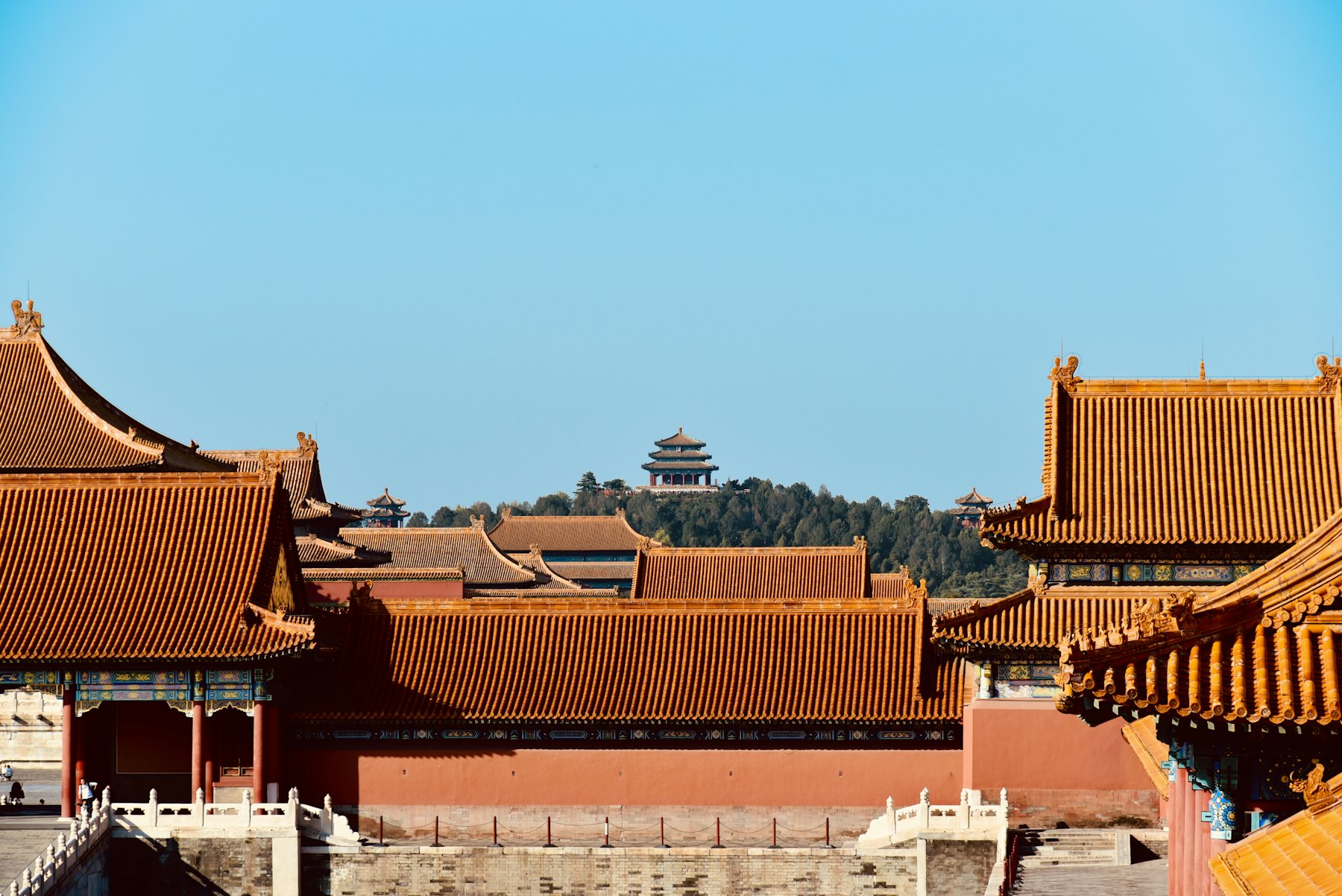
Choose Beijing if imperial history, the Great Wall, and hutong life matter most.
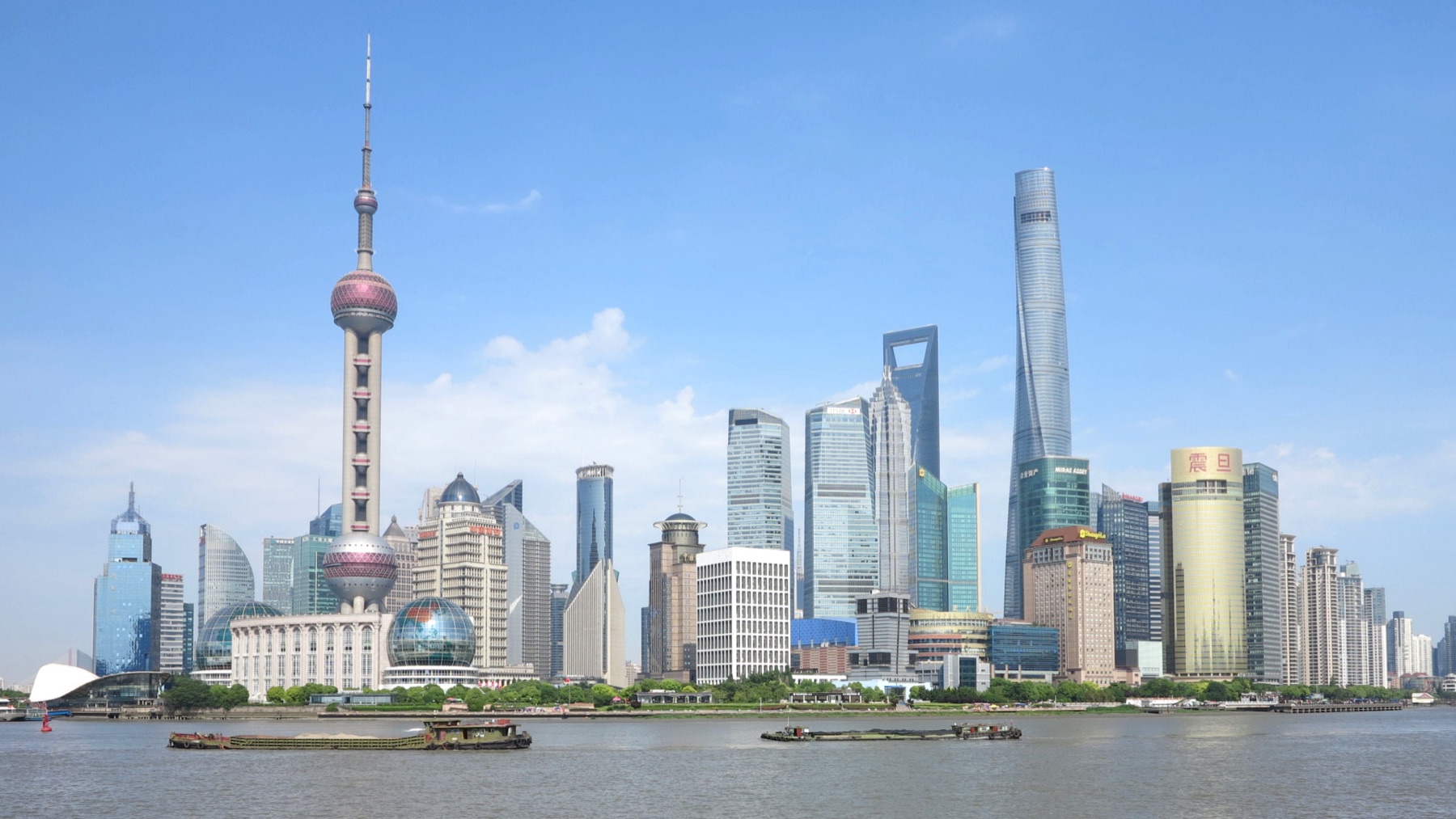
Choose Shanghai if you want the easiest possible first landing, with skyline views, museums, and the strongest international comfort layer.
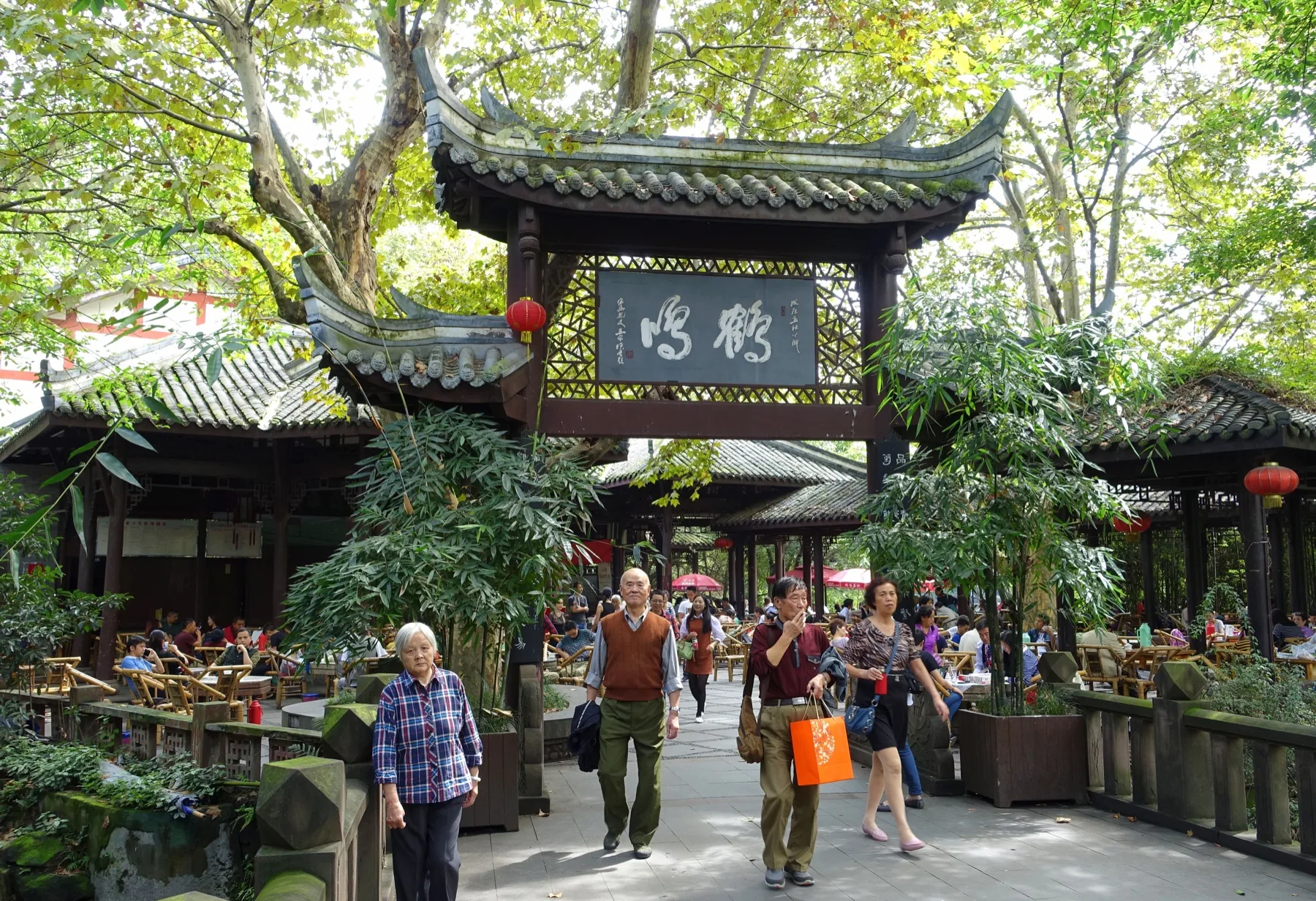
Choose Chengdu if you want pandas, hotpot, tea houses, and the slowest big-city pace in China.
Guangzhou is the city most often skipped and most often regretted skipping. It is not the most famous Chinese city, but for many first-time visitors it becomes the best food trip of their lives.
Practical Tips
- Getting There: Guangzhou Baiyun International Airport (CAN) connects to most major international hubs; Metro Line 3 runs from the terminal to downtown in 40–60 minutes for about ¥7. High-speed trains reach Hong Kong West Kowloon in as little as 47 minutes (¥215 second class) and Shenzhen in about 30 minutes.
- Getting Around: The metro is extensive, with English signs and announcements; rides cost ¥2–14. Buy a Yangchengtong card or use Alipay transport mini-programs.
- Language: More English signage than smaller Chinese cities, but less than Shanghai. Download a translation app and save your hotel address in Chinese.
- Payment: Alipay and WeChat Pay work widely. Some older tea houses and street stalls prefer cash or local payment codes — keep some RMB handy.
- Weather: Subtropical — hot and humid in summer, mild and damp in winter. Layers work year-round.
Frequently Asked Questions About Guangzhou
How much does a day in Guangzhou cost?
Budget travellers spend roughly ¥300–450 a day and mid-range travellers ¥600–950, counting a room, three meals, local transport and one paid sight. Dim sum breakfast is ¥50–90 per person, the metro is ¥2–14 a ride, and most of the old city is free to walk.
Is Guangzhou worth adding to a Hong Kong trip?
Yes — the high-speed train takes 47 minutes to about 1 hour 20 minutes from Guangzhou South to West Kowloon and costs ¥215 in second class on most departures. Two nights gives you the old-city food streets that Hong Kong prices make harder to afford. Check Hong Kong’s entry rules for your passport separately from mainland China’s.
Do I need to book Canton Tower tickets in advance?
Walk-up tickets are usually available, but booking on the tower’s official channels locks in a time slot and often saves a few yuan. Weekend evenings and public holidays are when slots actually sell out. Bring the passport you booked with — it is checked at the gate.
When should I avoid visiting Guangzhou?
Three windows: the Canton Fair phases (mid-April to early May and mid-October to early November) for hotel prices, July to September for heat and typhoons, and March for huinantian, the humidity surge that leaves floors damp and laundry wet. Mid-October to early December and January to February are the comfortable stretches.
Is Guangzhou easy to visit without speaking Chinese or Cantonese?
Mostly yes. Metro stations have English signage and announcements, central districts carry English street signs, and the fair years left hotel staff used to foreign guests. A translation app covers menus in smaller tea houses.
What should I eat in Guangzhou besides dim sum?
Wonton noodles, crispy-skin roast goose, cheung fun rice rolls, and congee are the everyday staples. Save one dinner for Chaoshan beef hotpot — fresh-sliced beef cooked eight to fifteen seconds in a light broth, about ¥80–120 per person.
Related Guides
- Best Places to Visit in China for First-Time Visitors
- How to Pay in China as a Tourist
- What to Eat in China: Food Guide for First-Time Visitors
- China Travel Mistakes to Avoid on Your First Trip
Photo credits: dim sum in bamboo steamers by change c c; Canton Tower at night by Lywin; Shamian Island street by Hossein Ghaedi. All three are used under the Pexels License and were downloaded on 24 October 2026.