The image that sells Guilin is a fisherman in a straw hat, bent over a bamboo raft at dusk, a cormorant on one arm and a lantern glowing between the two of them. Tourists pay to have that photograph taken for them near Xingping, and the fishermen are real people doing a job that once fed their families. Both are true at once, and together they introduce this part of China fairly. Guilin is a genuine landscape that has learned to package itself. The limestone towers are not a theme park; the boat schedules and West Street T-shirts are.
Quick Answer
Guilin suits first-time visitors to China who want scenery rather than skylines, and who can give it three days. Get there by high-speed rail from Guangzhou South (about 2.5 hours) or Shenzhen North (about 3 hours), or fly into Guilin Liangjiang International Airport (KWL), roughly 30 kilometers from the city center. The one decision that shapes the whole trip is how you travel the Li River: a full cruise boat from Guilin to Yangshuo, or a bamboo raft on the shorter, denser section between Yangdi and Xingping. Yangshuo, about 83 kilometers downstream, is where most first-time visitors end up wishing they had slept at least one night.
Why Guilin
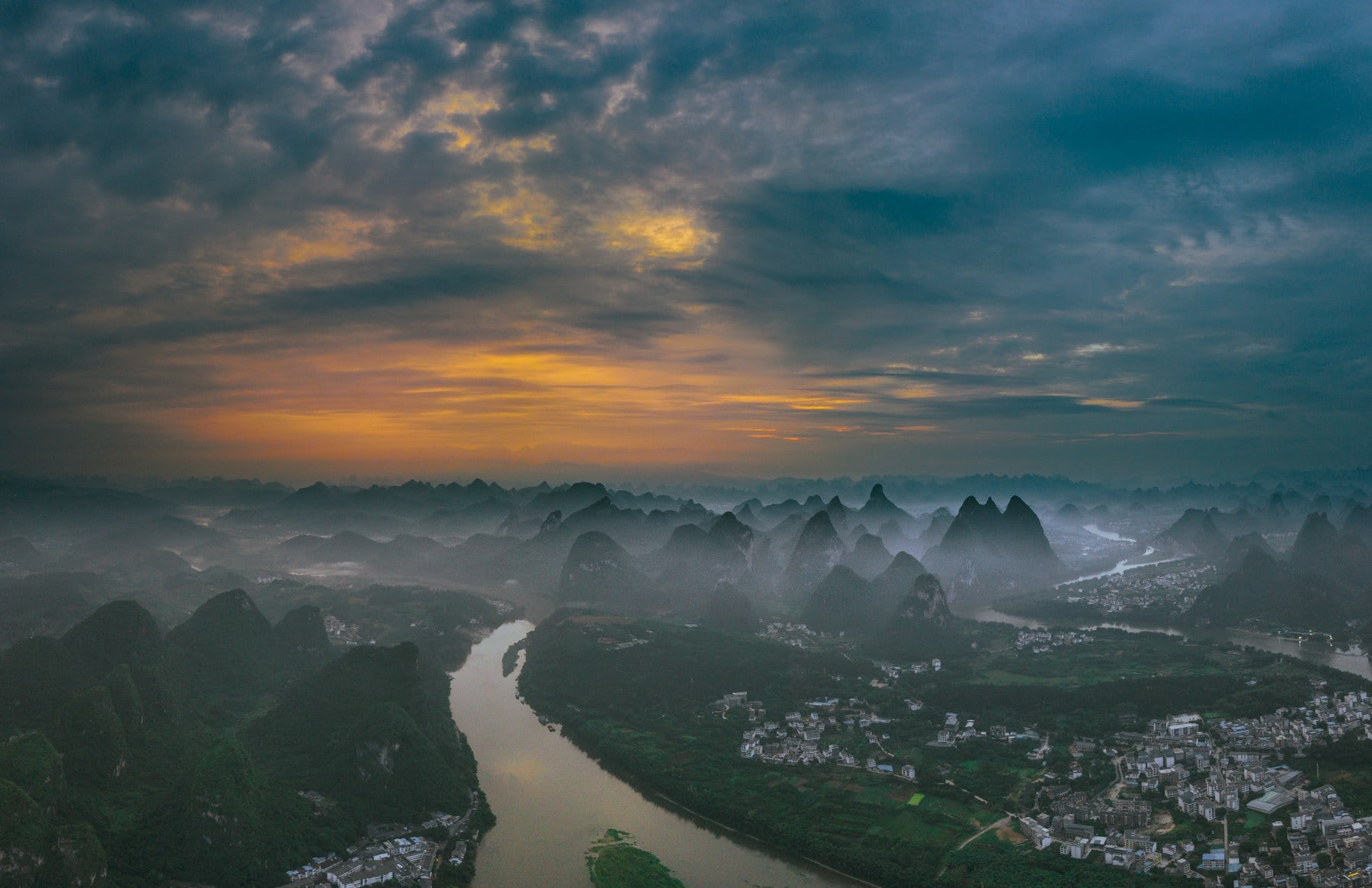
The limestone under this valley was laid down as a seabed a few hundred million years ago. Tectonic movement pushed it upward, rain dissolved it along its cracks, and what survived erosion were hundreds of separate towers rising out of a flat plain. That is the whole trick of the place: not one dramatic mountain, but several hundred of them standing in farmland, villages and river channels, close enough together that the layers overlap when you look up.
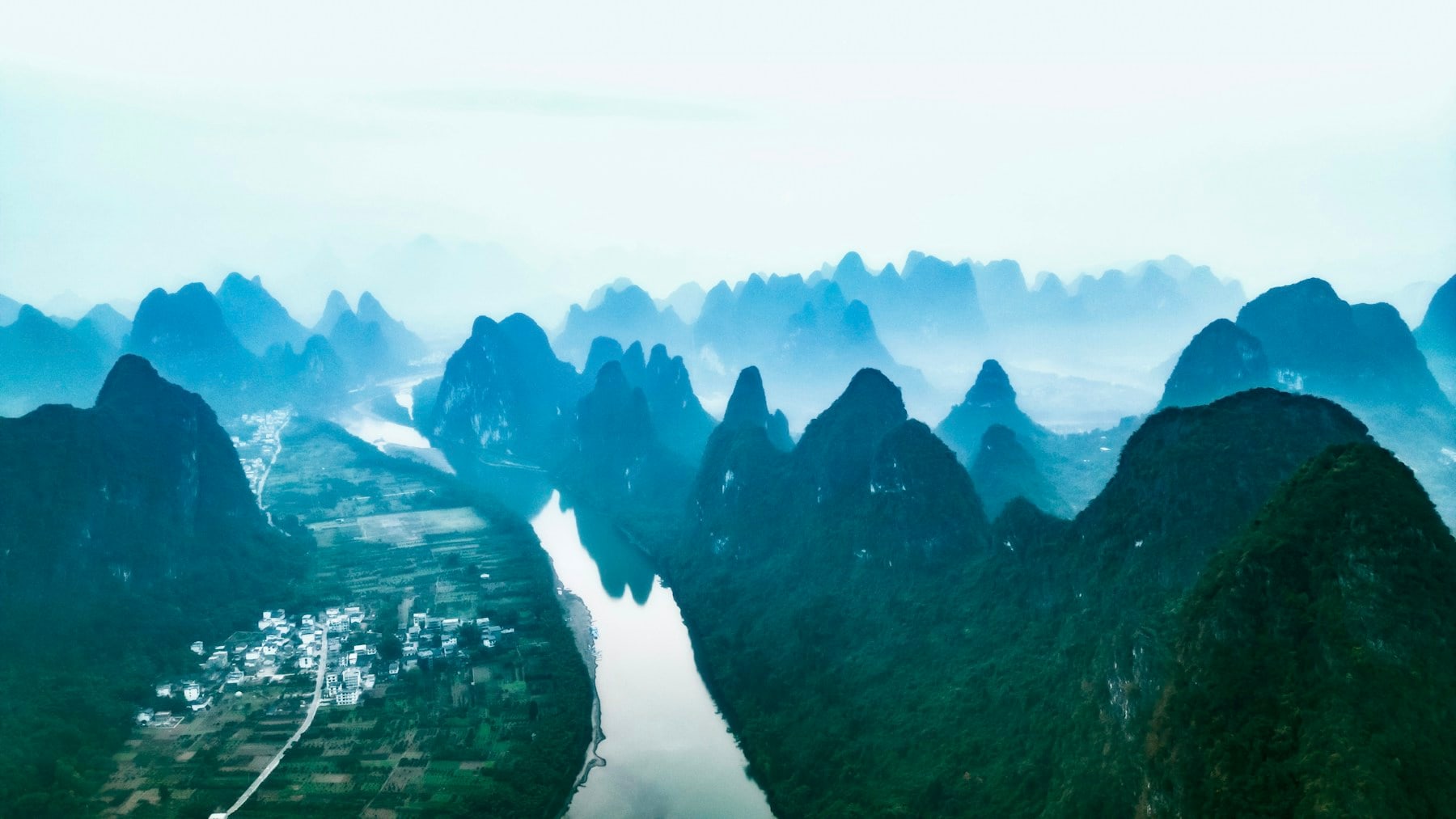
This also explains why Chinese landscape painting looks the way it does. The painters were not inventing those stacked peaks and river bends; they had a valley like this one to copy. What makes Guilin practical for a first trip is concentration: the best scenery sits along one corridor roughly 80 kilometers long, so you reach the core of it in days instead of spending your holiday in a van.
Who Guilin Is For
You will probably enjoy Guilin if:
- You want impressive nature without serious trekking. Most of the best views here are reached by boat, bicycle or short walk.
- This is your first trip to China and you want a region with easy transport and forgiving logistics.
- You like cycling, slow mornings, river valleys and photographing landscapes.
- You are traveling with family, including children who would suffer on a stair-heavy mountain route.
Guilin is probably the wrong choice if:
- You have only two or three days in China in total. Guilin deserves its own block of days or it feels rushed.
- You dislike tourist infrastructure. Yangshuo’s West Street is one of the most commercial streets in southern China.
- You want big-city energy, shopping, nightlife and museums. The region is pleasant but small.
- Your dates fall in the first week of October and you have not booked anything yet.
How Many Days
Three days is the honest minimum. Day one in Guilin city for Elephant Trunk Hill, Seven Star Park and an evening walk along the Two Rivers and Four Lakes canal loop. Day two on the Li River, ending in Yangshuo. Day three in the Yangshuo countryside by bicycle or Yulong River raft. Four days is better, with the extra day going to the Longji Rice Terraces or a second slow day around Yangshuo. Two days means choosing: take the river and accept that you barely see Guilin city, or keep the city and skip the cruise.
Best Time to Visit
April and May bring water into the Longji terraces and mist into the valleys, which is what most photographers come for. The trade is rain: afternoon storms are frequent, and after heavy rain the Li River turns brown-grey for a day or two. Late September and October offer the best light and the gold terraces, and they are also the busiest weeks. The National Day holiday in the first week of October fills cruise boats, village guesthouses and trains; book weeks ahead or shift your dates. Winter from December to February is quiet and cheap, with low water levels that occasionally shorten or suspend cruise routes after dry spells. Summers are hot, humid and storm-prone, with a full river and comfortable rafting but flat midday light.
What to Do in Guilin
The Li River: three ways to travel it
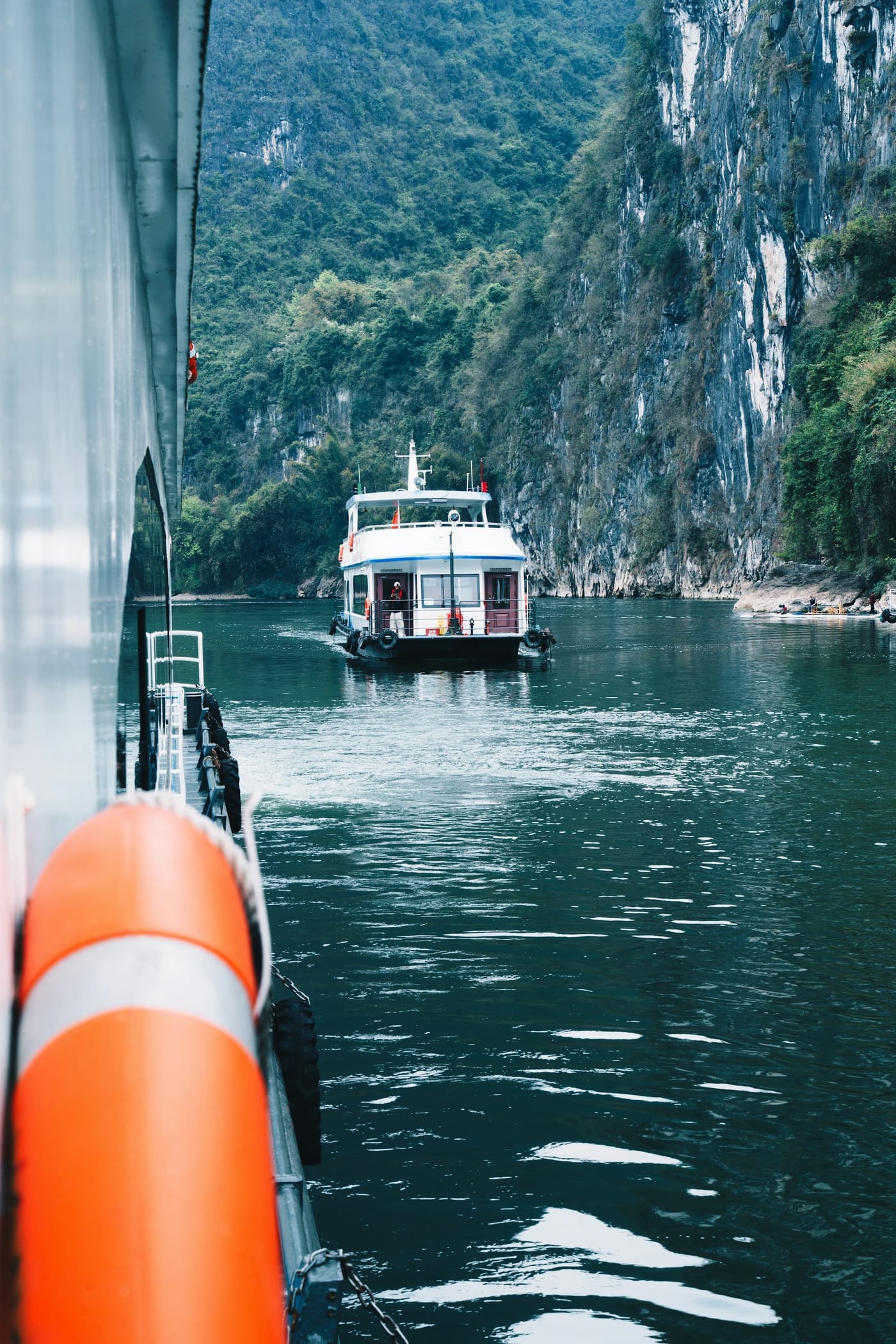
The full cruise from Guilin’s dock to Yangshuo takes about four to four and a half hours on the water, longer on older boats. Prices run roughly ¥215 to ¥430 depending on boat class, with the mid-range boats including lunch. You pass the famous bend near Xingping that appears on the 20 yuan banknote mid-morning, and you arrive in Yangshuo around early afternoon, where a free shuttle connects the pier to West Street. The weaknesses are real: the boat runs on a schedule, the engines never stop, and at the famous bends everyone crowds the same side of the deck for the same photograph.
The bamboo raft from Yangdi to Xingping covers the most concentrated scenery in about 1.5 to 2 hours. The rafts look like traditional bamboo but carry an outboard motor, seat up to four people under a plastic canopy, and cost roughly ¥150 to ¥255 per person depending on the dock and the season. The motors are loud and the rafts stay close to the banks, but this section is the postcard: steep towers, river bends, water buffalo on the sandbars, and the banknote viewpoint near the end. The catch is geography. Yangdi is about 40 minutes north of Yangshuo by road and over an hour south of Guilin, and the ride ends at Xingping. Plan your return before you board: buses run from Xingping back toward Yangshuo, but the last useful departures are in the afternoon, and tourists miss them every month.

The third option is the quietest: the Yulong River in Yangshuo, rafted section by section across small stone weirs, priced per raft at roughly ¥100 to ¥200. It lacks the scale of the main river; it also lacks the tour groups.
Then there is the bicycle. The Yangshuo valley is flat, rentals run ¥10 to ¥30 a day, and the ride to Moon Hill and the Big Banyan Tree is the best half-day in the region. Go early; by mid-morning the same roads carry coach groups.
A realistic day in Guilin city
The city is a base more than a destination, but one day covers it: Elephant Trunk Hill (¥55 to ¥75), Reed Flute Cave (about ¥90), and an evening Two Rivers and Four Lakes night cruise past the Sun and Moon Pagodas (¥150 to ¥220). Check prices through official tourism channels, because Guilin’s attraction ticketing has changed repeatedly in recent years.
Yangshuo
Yangshuo is the reason many people keep coming back to Guilin. The peaks press closer together here, the farmland between them is worked rather than photographed, and the town sits on the river with the mountains as its backdrop. If you have three nights in the region, spend two of them here rather than in the city.
West Street is the center, and it has been a street for something like 1,400 years. What that means in practice is a pedestrian lane of neon signs, bars, climbing gear shops, beer fish restaurants and counterfeit sunglasses. Go at seven or eight in the morning, before the coaches, and you get the other version: elderly men playing chess, breakfast stalls, shutters going up. The middle and west sections are better than the crush at the east entrance. Beer fish, the local signature, is freshwater fish braised with beer, tomatoes and chili, and for two people expect ¥60 to ¥100 at a reasonable place. The classic overcharge is per-jin pricing: the menu gives the price per 500 grams without saying how much the fish weighs, and a “cheap” fish turns into a ¥200 plate. Ask the weight first.
Yangshuo is also one of China’s climbing centers, with limestone crags all around the valley and day passes at guiding shops around ¥80. If climbing is not your thing, the valley is still the point: rent a bike, ride west toward Baisha, cross the old stone bridges, and turn back before the afternoon heat. The staged cormorant fishermen near Xingping at sunset charge by the photograph; agree the price before the lantern is lit.
Longji Rice Terraces
The Longji, or Dragon’s Backbone, terraces sit about 100 kilometers north of Guilin in Longsheng County, built over centuries by Zhuang and Yao farmers into contours that follow the hillsides. They are worth the journey and expensive in time: two and a half to three hours each way by road, with a transfer in Longsheng town unless you catch a seasonal direct shuttle.
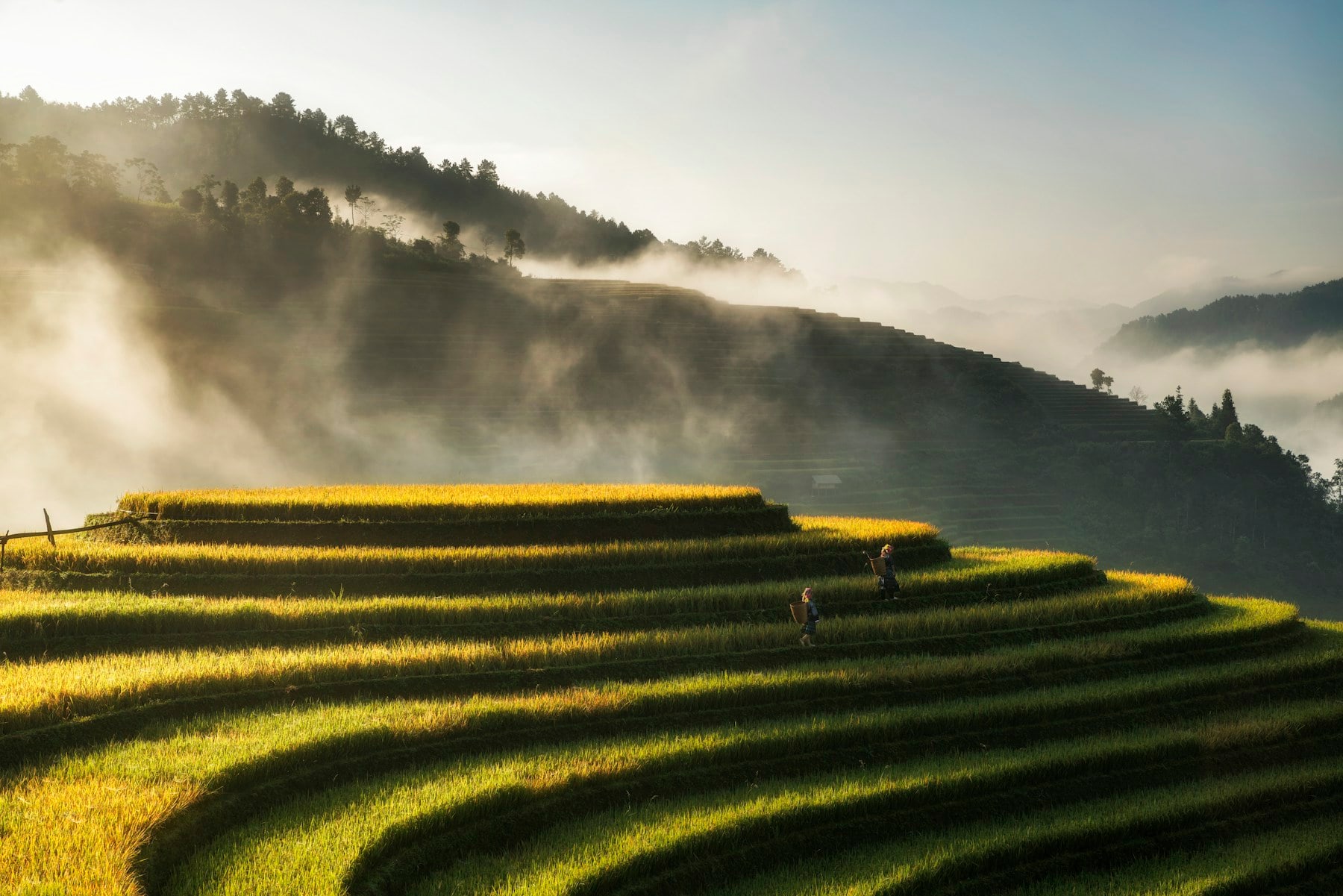
Choose one area, not both. Ping’an is the more compact Zhuang village area, closer to the road, with wooden guesthouses stacked up the slope. Dazhai and Jinkeng, further in, belong to Yao villages and offer broader terrace views, with a cable car up toward the Golden Buddha viewpoint for roughly ¥60 to ¥120 extra. Admission is around ¥80 with multi-day validity under recent rules, but confirm current pricing and shuttle times through official or reputable local channels before you commit a day.
The seasons decide what you see. April and May flood the terraces into mirror pools, summer turns them green, late September and October turns them gold before harvest, and winter is bare and quiet. If you can, sleep one night in a village and wake for sunrise, which is the only time the terraces belong to anyone but the day-trippers. Bring shoes with grip; the paths are steep concrete, often slick, and luggage wheels are a mistake on them.
What to Eat in Guilin
Start with Guilin rice noodles, the local breakfast, eaten dry-mixed rather than in soup. In neighborhood shops, two liang (二两, roughly 200 grams of noodles) goes for ¥5 to ¥8, with beef or brisket and the classic condiment bar of pickled long beans, scallions, chili and broth on the side. Chains like Chongshan and Ritouhuo sit around ¥10 to ¥15 with extra toppings. The same bowl on the main tourist streets runs ¥15 to ¥25 and tastes worse. The move is to walk two blocks off the pedestrian drag, order “er liang, gan ban” and help yourself at the condiment bar. Skip the tourist combo sets; they exist to photograph well and charge more.
Horse meat noodles are a Guilin specialty, served in small bowls with a strong, dark broth that divides visitors. Beer fish belongs to Yangshuo rather than the city. Steamed taro layered with pork belly, oil tea from the Longsheng hills, which is salty and savory with puffed rice rather than sweet, round out the local list. For the densest concentration of everyday noodle shops, try the Tiexi neighborhood west of the city center rather than Zhengyang Pedestrian Street, where prices are local and the queues are workers rather than tour groups.
Where to Stay
In Guilin city, base yourself around Central Square and Zhengyang Pedestrian Street, or south toward Elephant Trunk Hill. Midrange hotels run ¥150 to ¥400, and for a one-night stay the practical requirement is a short ride to the bus station and the cruise dock rather than a famous view. Guilin North railway station is closer to the center than Guilin West; if your train arrives at the West station, budget 30 to 40 minutes into town.
In Yangshuo, stay in town near West Street if you want bars and late food at your door, or in a guesthouse along the river road about 10 to 15 minutes out, where ¥200 to ¥600 buys a quieter room and usually bicycle rental included. Photographers should consider a night in Jiuxian, Fuli or Xingping for dawn on the river, when the mist and the fishermen do their work before the boats arrive.
In Longji, village guesthouses in Ping’an or Dazhai are basic, roughly ¥100 to ¥300, and should be booked well ahead for October. Do not expect lifts or comfortable beds; expect the terraces at 6 a.m. without other people in the frame.
Getting There and Around
High-speed rail is the easiest way in. Guangzhou South to Guilin takes about 2.5 hours, Shenzhen North about 3 hours, and Guiyang about 2. Book through the official 12306 platform or a reputable app with your passport as the ticket, as our high-speed rail guide for foreigners explains. Flying into Guilin Liangjiang works too: the airport bus to the city costs ¥20 to ¥30 and takes under an hour, while a metered taxi runs about ¥80 to ¥120 depending on the terminal.
Between Guilin and Yangshuo, the bus is the default: ¥65 to ¥80 per person, 60 to 90 minutes, departures every 15 to 30 minutes from the city’s bus stations near the railway station. The Li River cruise does the same journey on water, and ride-hailing does it by road for roughly ¥200 to ¥300. If you take a taxi, insist on the meter (“da biao”); flat-rate quotes from stations routinely run 1.5 to 2 times the metered fare. Use a ride-hailing app where you can, and save your hotel’s Chinese address on your phone before you land.
Two scams repeat often enough to name. Near Guilin’s station, touts offer “¥50 per person Li River tours” that turn out to be a short motorboat ride near Yangdi or a stop at a souvenir shop; the genuine Yangdi to Xingping raft is bought at the official dock, at ¥150 to ¥255 per person, not ¥50. The other is the Longji bus commission: drivers steer you into a “tea ceremony” or a village restaurant on the way to the terraces, adding an hour you did not budget.
Prepare payment and connectivity before arrival. Bind an international card to Alipay or WeChat Pay as described in our guide to paying in China as a tourist, and sort out data access with the notes in best apps for traveling in China. English is rare outside hotels and cruise boats; a translation app and screenshots of your bookings carry most of the weight.
Common Mistakes
Booking the cruise and planning nothing for arrival day
The boat docks in Yangshuo around early afternoon. If your hotel is back in Guilin, the day is already spent. Sleep in Yangshuo on cruise day.
Rafting Yangdi to Xingping without a return plan
The raft ends where the bus is thin. Confirm the last bus toward Yangshuo, or pre-arrange a car, before you get on the water.
Eating your first bowl of rice noodles on the tourist street
You will pay ¥20 or more for a bowl that costs ¥6 two streets away, and conclude that Guilin is expensive.
Doing Longji as a same-day trip
Leave at seven, return at seven, and the terraces get 90 minutes of your attention. Either stay a night or cut it from a three-day trip.
Traveling during the first week of October unbooked
National Day fills the cruise boats, the village guesthouses and the trains simultaneously. Book early or shift dates.
Assuming West Street is local life
It is a 1,400-year-old street that now sells neon and beer fish. The local version is the morning street, the back lanes and the breakfast queues.
Ignoring the water level in winter
After dry winter spells, cruises shorten the route or suspend sailings. If the Li River is the reason you came, check conditions before booking a winter boat.
Guilin vs Zhangjiajie vs Yangshuo
These three get compared because they are the scenery options on a first China route, and they are not substitutes.
Zhangjiajie, in Hunan, is the vertical one: sandstone pillars, the Avatar mountains, the glass bridge, and an itinerary built from cableways and staircases over four or five days. It is more physically demanding and more expensive, with park passes in the ¥200-plus range and serious crowds at the main lifts. Guilin is the horizontal alternative: water, bicycles, boats, and a pace you set yourself.
Guilin city against Yangshuo is a smaller question, and the answer is usually Yangshuo. The city is a fine base with better hotels and the departure docks, but the countryside downstream is where the region delivers. If you dislike cities entirely, base yourself in Yangshuo for three or four days and treat Guilin city as a half-day stop on the way to the cruise dock.
Final Thoughts
One suggestion, if you want the single best morning in the region: sleep in Yangshuo, rent a bicycle the day you arrive, and leave town by 6:30 the next morning along the Yulong road before the first coach. Ride for two hours, eat noodles in a village, come back before the heat. That morning will cost you ¥30 and will outperform anything on the cruise schedule.
Frequently Asked Questions
Is Guilin worth visiting?
For scenery, yes, with one condition: give it at least three days and at least one night in Yangshuo. The landscape is the real thing, and unusual enough to justify a detour from the Beijing-Shanghai route. The trip goes wrong mainly when travelers book the famous elements without planning the days between them.
Is the Li River cruise worth it?
The full cruise is worth it if you value comfort and one-way logistics: four hours on the water, lunch on the better boats, and arrival in Yangshuo with the day still ahead. If you want the densest scenery for less money, the Yangdi to Xingping bamboo raft covers the best stretch in about two hours for roughly ¥150 to ¥255 per person. Doing both is redundant; doing neither is a missed trip.
Photo credits: All images from Unsplash under the Unsplash License (free for commercial and non-commercial use, attribution appreciated). Photographers could not be identified from publicly accessible endpoints at the time of writing. Hero image and karst peaks: Li River corridor aerials; bamboo raft: cormorant fisherman at dusk; cruise: Li River tour boat; Longji: morning terraces.