
Quick Answer
Xi’an is the best first Chinese city for travelers who want history to feel close enough to touch. The Terracotta Warriors are the reason many people put it on the route, but they are rarely the whole memory. The city wall at dusk, a bowl of noodles pulled wider than a belt, the call to prayer near the Great Mosque, and the Bell Tower glowing above evening traffic often stay with visitors just as long.
Give Xi’an three full days if you can. Use one for the old city, wall, mosque and food streets; one for the Terracotta Warriors; and one for the Shaanxi History Museum, Giant Wild Goose Pagoda and a slower look at modern Xi’an. Two days is possible, but it turns a city with several layers into one archaeological day and one hurried evening.
Xi’an is easier to navigate than Beijing and less internationally polished than Shanghai. English is not universal, the most important attractions can be crowded, and reservations matter. Yet the historic center is compact enough to understand quickly, the metro handles many useful journeys, and the food keeps its history from feeling like homework.
If you are choosing between several first stops, use the China city picker or start with the guide to the best places to visit in China for first-time visitors.
Why Xi’an Belongs on a First China Trip
Beijing tells imperial history through scale and ceremony. Xi’an tells older history through layers. A Ming-era wall encloses streets shaped by later generations. A Tang pagoda stands beside fountains, shopping centers and night crowds. The archaeological army outside the city faces east, while scooters and delivery riders move around the Bell Tower at the center of modern traffic.
This overlap is what makes Xi’an more than an obligatory stop between Beijing and Shanghai. History is not locked in one district. It keeps appearing in the shape of the road, the names on metro maps, the objects in the museum and the food of its Muslim community.
Xi’an can also feel more immediate than Beijing. The central sights are closer together, the old city has an obvious boundary, and an evening can move naturally from the wall to the Bell Tower and into the lanes behind the Drum Tower. You still need to plan. You simply spend less of the day fighting the map.
Who Should Visit Xi’an?
You will probably like Xi’an if you care about archaeology, ancient capitals, Silk Road history, city walks, noodles, street food or the feeling of seeing famous objects in the landscape where they were found. It fits especially well between Beijing and Shanghai on a first route.
Xi’an may not be your best choice if you have no interest in historical sites, dislike dense crowds, want a highly international restaurant scene, or expect the Terracotta Warriors to be a quiet encounter. The main excavation halls can be noisy and tightly packed, particularly during holidays and peak hours.
Travelers sometimes arrive thinking Xi’an means “warriors, one night, leave.” That plan works on paper. It also misses the city wall at sunset, the museum collection that gives context to the warriors, and the streets where Xi’an feels like a living northwestern city rather than a historical exhibit.
How Many Days Do You Need in Xi’an?
Two days: enough for a focused first visit. Give one full day to the Terracotta Warriors and one to the city wall, Bell and Drum Towers, Muslim Quarter and a pagoda or museum. Expect compromises.
Three days: the best balance. The archaeology gets its own day, the old city gets an unhurried evening, and you have time for the Shaanxi History Museum or Giant Wild Goose Pagoda without sprinting between reservations.
Four days or more: useful if you want the Stele Forest, Small Wild Goose Pagoda, a second museum, a food-focused day, or Mount Hua. Mount Hua is a separate, physically demanding trip, not a casual extra after a full city schedule.
The classic 10-day China itinerary places Xi’an between Beijing and Shanghai. That route works because high-speed rail connects three very different cities.
Best Time to Visit Xi’an
April–May and September–October usually offer the easiest walking weather. Summer can be hot, sunny and tiring on the exposed city wall, where temperatures above 35°C meet no shade, while winter is cold and dry but often atmospheric, especially with a bowl of lamb soup as recovery.
Visit later in the day when conditions are comfortable, but check current entry and bicycle-rental times before building the evening around a complete circuit.
Public holidays can transform the experience. The Terracotta Warriors, Shaanxi History Museum, food streets and high-speed trains become much busier during National Day (October 1–7), Labor Day (May 1–5) and Spring Festival; hotels in the old city can double. March occasionally brings dust storms. If your dates are fixed, reserve early and keep the plan simpler.
Best Things to Do in Xi’an
See the Terracotta Warriors, With Realistic Expectations
The Terracotta Warriors are extraordinary. They are also displayed inside large excavation halls visited by enormous numbers of people.
Pit 1 creates the famous first impression: rows of figures stretching into a vast hangar-like space. The individual faces and repair work become easier to appreciate in the smaller pits and exhibition areas. Step back from the front railing, look at the whole excavation, and give the quieter details time.
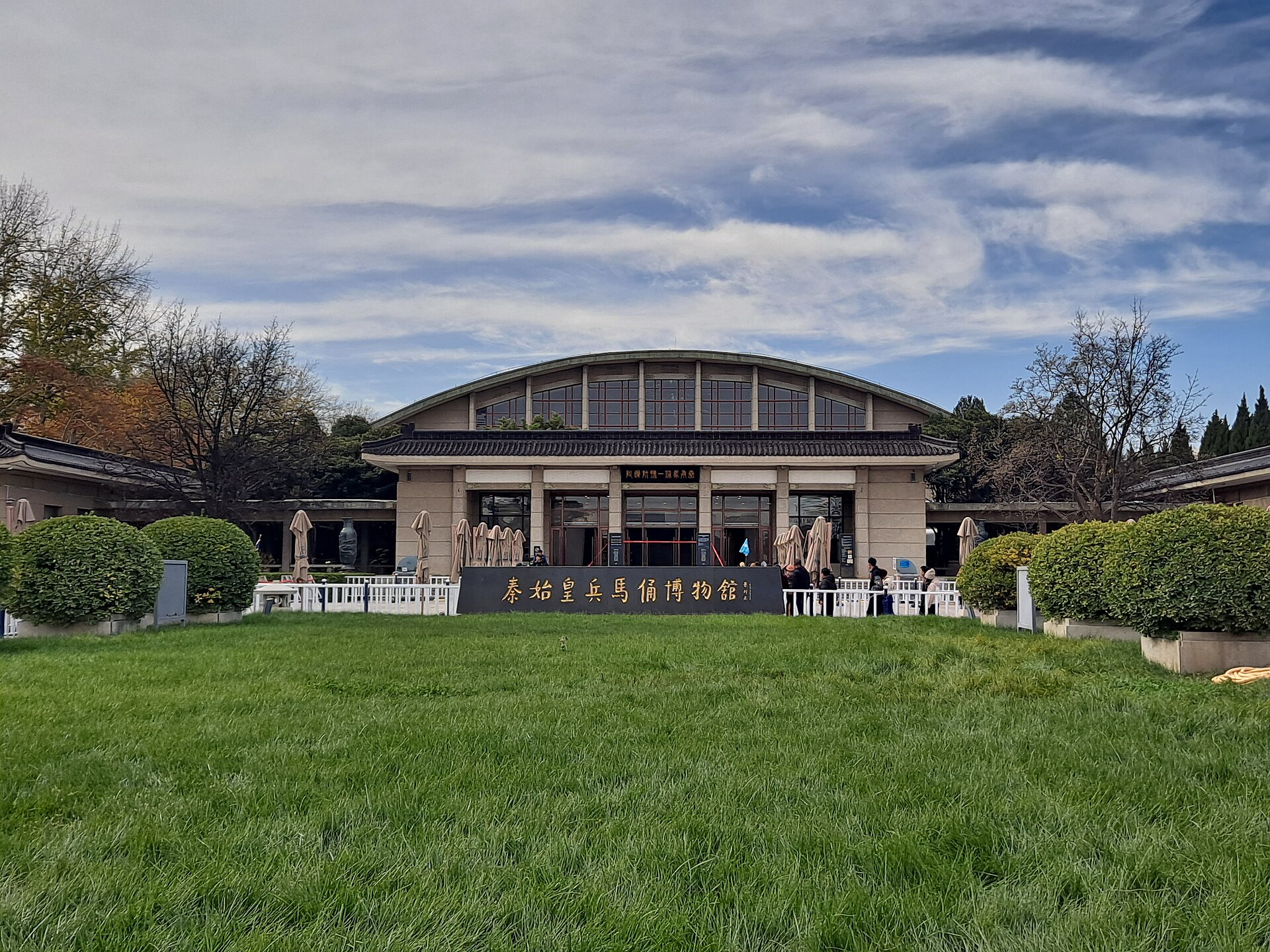
The official Emperor Qinshihuang’s Mausoleum Site Museum ticket page currently says all visitors, including foreign visitors, must make a real-name advance reservation with a passport, up to seven days ahead in a fixed entry time slot. The ticket is ¥120, covering both the Terracotta Army Museum and the Lishan Garden site with a free shuttle between them; students pay ¥60. Daily entry is capped at 65,000 (70,000 in peak summer), and unlike Beijing’s Palace Museum, the museum opens on Mondays. Peak season (16 March to 15 November) runs 8:30 to 18:30 with last entry at 17:00; the low season (16 November to 15 March) closes at 18:00 with last entry at 16:30. Book through bmy.com.cn or the official WeChat accounts; outside fast-track sellers are not official. Check the official page again; channels and entry times can change.
Allow most of a day once transport is included; Lintong is outside central Xi’an. Public bus 306 from the Fangzhicheng hub costs about ¥7-10 each way, metro line 9 reaches Lintong for a short taxi hop, and coaches run about ¥25 each way; a taxi or ride-hailing car is ¥120–150. Agree the return plan and save the destination name in Chinese before leaving. A guide can add archaeological context; a guide who rushes you from photo point to photo point can subtract it.
Walk or Cycle the City Wall Near Sunset
Xi’an’s wall gives the old city a shape you can understand with your feet. From the top, you see tiled roofs and gate towers on one side, apartment blocks and traffic on the other. This is the clearest place to feel that Xi’an is not preserved under glass.
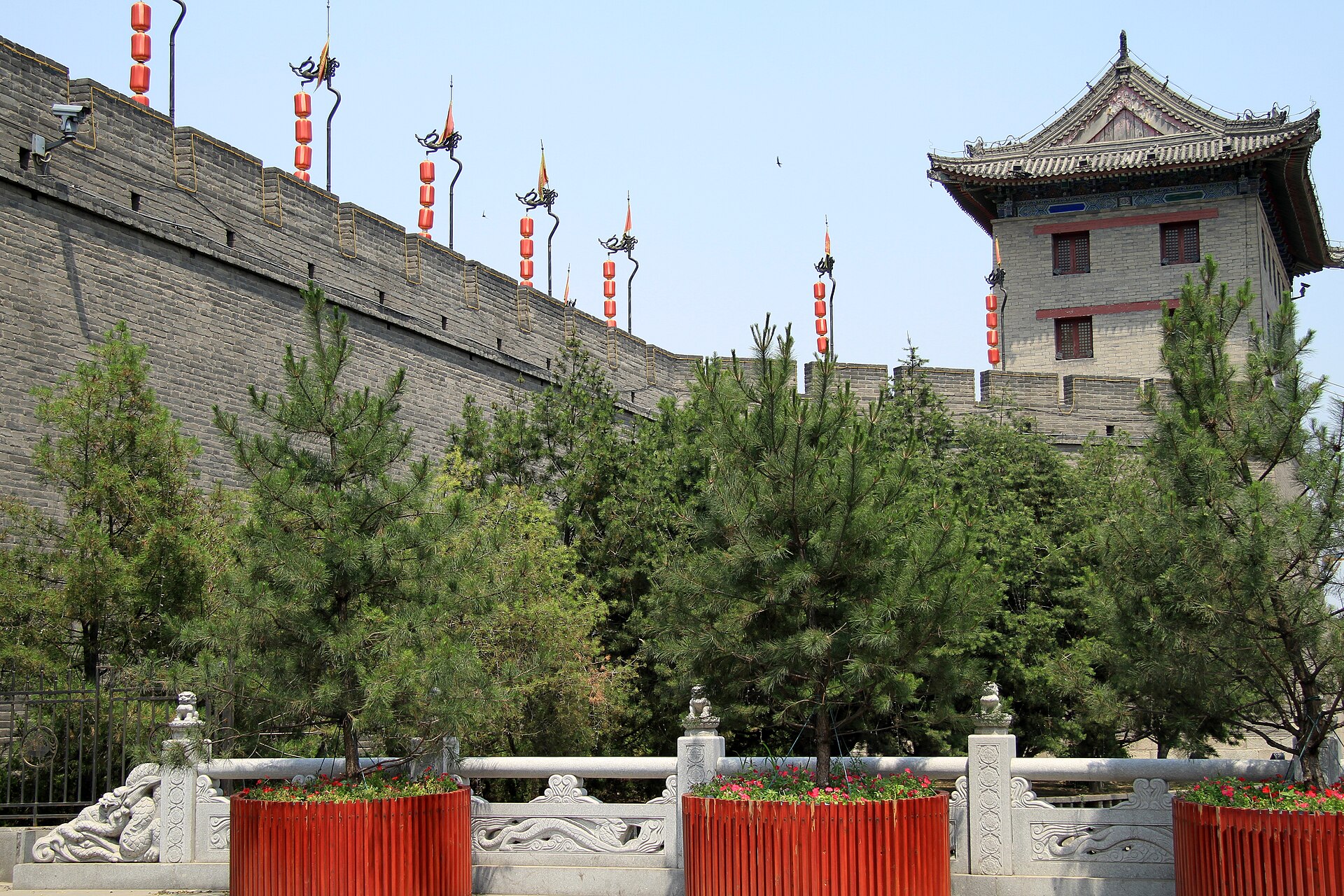
The full wall is roughly 14 kilometers around. Cycling sounds easy until summer heat, wind, uneven bricks or tired legs enter the plan. You do not need to complete the circuit. Enter at the South Gate (Yongningmen), walk or ride a comfortable section, pause at a tower and leave while the experience still feels good.
Entry is ¥54, or ¥27 for students, and bikes rent for ¥45 per person for three hours (¥90 for a tandem, ¥100 deposit). The South Gate stays open 08:00–22:00, but after 20:00 bikes can only be returned at Yongningmen, and children under 12 cannot ride. Rental availability and gate times can change; check official information on the day.
See the Bell and Drum Towers After Dark
The Bell Tower stands at the center of a traffic roundabout, which is an honest summary of Xi’an: history illuminated while the current city moves around it. At night, the roofs glow and the roads become lines of headlights. The best first view is often from street level rather than from inside.
The Drum Tower leads naturally toward the Muslim Quarter. A combined Bell and Drum Tower ticket is ¥50 (¥30 separately); do not force both interiors into the itinerary unless their exhibitions interest you. The exterior views and the movement between them may be enough.
Go Beyond the Main Muslim Quarter Food Street
The main street behind the Drum Tower is bright, busy and highly commercial. It can be fun, especially on a first evening. It is not the entire Muslim Quarter.
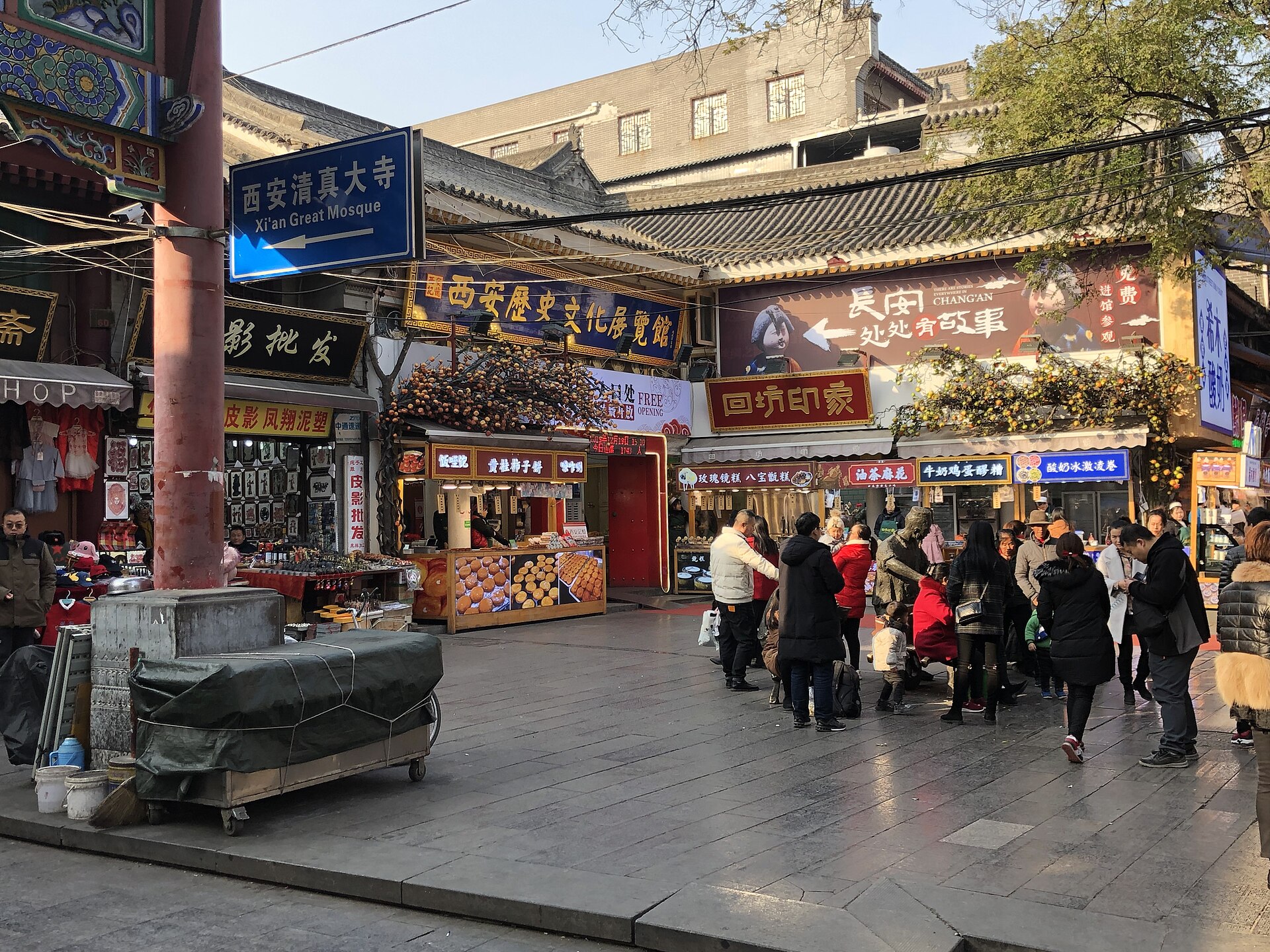
Walk beyond the most photographed stalls and the atmosphere changes. Smaller lanes hold bakeries, family shops, butcher counters, mosques and neighborhood routines. The Great Mosque is a place of worship, not merely an attraction hidden behind a market. Dress and behave respectfully, avoid interrupting prayer, and check current visitor access.
Do not assume every stall in the wider district follows the same halal standard, and do not reduce the Hui community to skewers and souvenir photos. Food is an invitation into the neighborhood, not a substitute for understanding it.
Reserve the Shaanxi History Museum Before You Arrive
The Shaanxi History Museum is the place that turns Xi’an’s long timeline into objects you can examine closely: bronze vessels, pottery figures, Tang gold and silver, and finds from across the province.
It is also a place travelers regularly discover too late. Admission to the main building is free with a reservation, but places are limited, reservations are released in advance, and in summer the daily quota fills within minutes. The Treasure Gallery costs ¥30 extra (confirm current prices). The museum operates more than one venue, so confirm the branch, address, reservation and exhibition before you go.
Do not schedule the museum as a backup you will “maybe do” after lunch. If it matters to you, solve the reservation first and build that day around it.
Visit the Giant Wild Goose Pagoda, Then Decide How Much Spectacle You Want
The Giant Wild Goose Pagoda connects Xi’an to Buddhist exchange and the Silk Road networks of the Tang era. Entry to the pagoda grounds is about ¥40, climbing the pagoda itself another ¥25, and the nearby Great Mosque about ¥25 (confirm current prices for all three). Around it, present-day Xi’an offers plazas, fountains, shopping and the brightly staged Tang Paradise-style evening atmosphere of the wider Qujiang area, with fountain shows usually at 19:00 and 21:00 (check the day’s schedule).
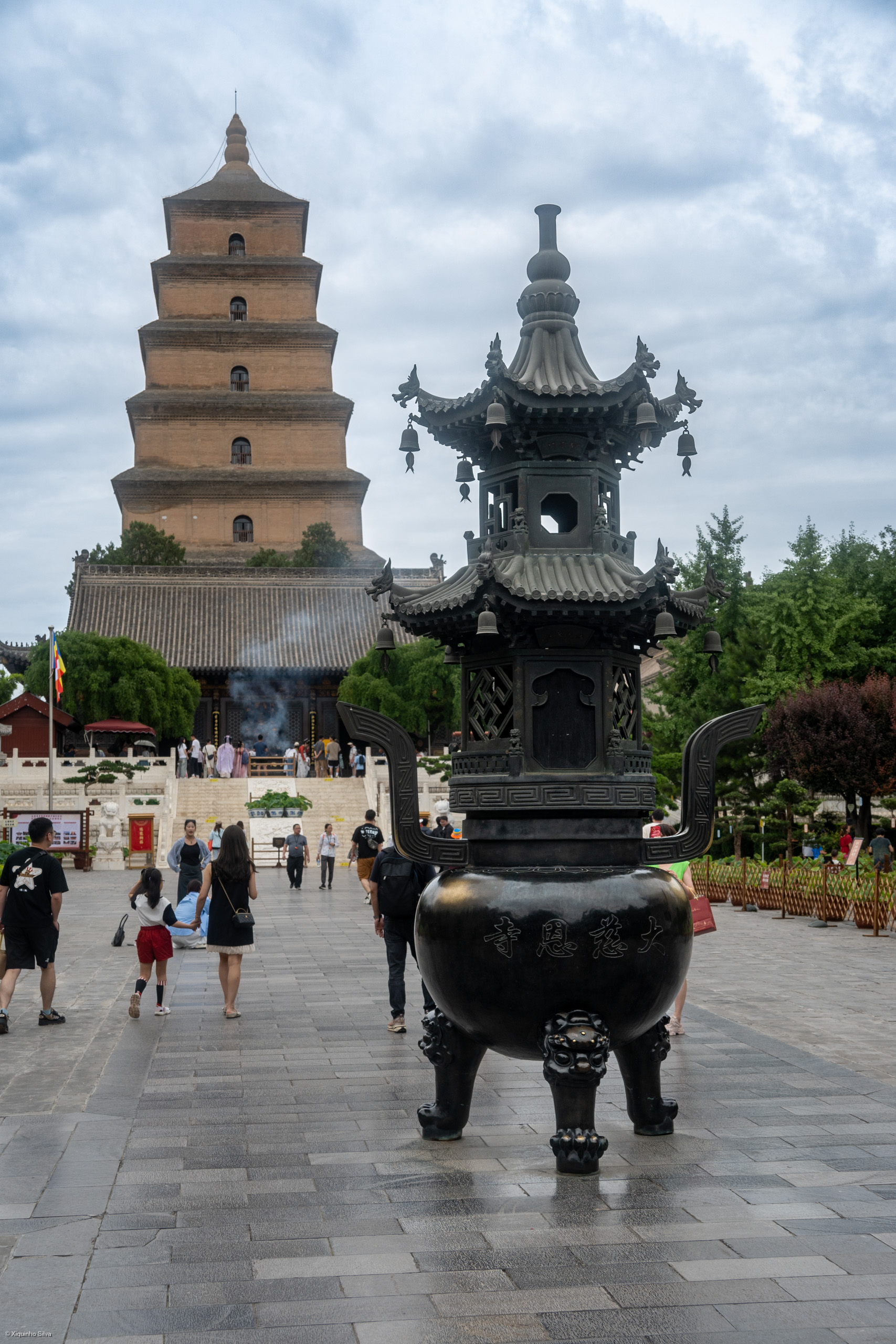
Some visitors love the lights, performances and people wearing hanfu. Others find the area theatrical and crowded. See the pagoda in daylight if history is the priority; stay into the evening if contemporary historical imagination interests you.
The important distinction is between an old monument and a modern presentation of the past. Xi’an contains both, often on the same walk.
A Realistic Three-Day Xi’an Itinerary
Day 1: Old City, Wall and Evening Food
Start gently. Save the hotel address in Chinese, confirm payment and mobile data, then walk around the Bell Tower area without trying to enter everything. Visit the city wall in the late afternoon, using the South Gate if it suits your route. Stay for changing light.
Afterward, move toward the Drum Tower and Muslim Quarter. Try one or two foods rather than buying whatever appears first. Leave the main street for a quieter lane, and keep the Great Mosque’s religious role in mind.
Day 2: Terracotta Warriors
Give the museum and transport the whole day. Carry the original passport used for the reservation, leave early, and expect the first pit to be crowded. Visit the smaller pits and exhibition areas rather than treating Pit 1 as the only reason to go.
If energy and time allow, include Lishan Garden because it is part of the museum complex. Return to Xi’an for a simple dinner. Do not attach Mount Hua or another major attraction to this day.
Day 3: Museum, Pagoda and a Slower City
Use your Shaanxi History Museum reservation as the day’s anchor. Continue toward the Giant Wild Goose Pagoda, then choose between a quieter neighborhood meal and the larger evening spectacle around Qujiang.
If the museum reservation is unavailable, use the Stele Forest, Small Wild Goose Pagoda, a food walk or a slower old-city day as the replacement. A missed ticket does not have to ruin Xi’an.
What to Eat in Xi’an
Xi’an rewards hunger, but not speed.
Biangbiang noodles are broad, chewy and usually dressed with chili, aromatics and vinegar; a bowl runs about ¥15–25. Roujiamo places chopped meat inside a crisp flatbread for ¥10–15 and is often described as a Chinese hamburger, though eating it on its own terms is more useful. Liangpi brings cool, springy noodles with vinegar, garlic and chili for ¥8–12. Yangrou paomo asks you to tear bread into a bowl before lamb broth is added, roughly ¥25–40 (confirm current prices); the tearing is part of the meal, not a delay before it.
Also look for persimmon cakes, dumplings in sour soup, steamed buns, skewers and the many breads associated with Xi’an’s Hui food traditions.
The busiest stall is not automatically the best, and the longest social-media queue is not a cultural obligation. Follow turnover, cleanliness and what local customers are ordering. The same dishes in the Sajin Qiao and Dapiyuan lanes cost about 30% less. If you have allergies or dietary restrictions, use translated notes; sauces and broths may contain ingredients that are not visible.
Read the broader China food guide before your trip, especially if menus without English make you nervous.
Where to Stay in Xi’an
Bell Tower / Drum Tower: easiest for a first visit, evening walks and old-city atmosphere. It can be noisy and crowded, so check reviews for room position and sound insulation.
Yongningmen / South Gate: convenient for the wall, metro access and restaurants, with a little more breathing room than the Bell Tower crossroads.
Giant Wild Goose Pagoda / Qujiang: useful for families, museums, landscaped public areas and evening attractions. It is farther from the old city’s food lanes.
Near Xi’an North Railway Station: practical only for a very early train or brief transfer. It is not the best base for experiencing the city.
As elsewhere in China, a hotel near a useful metro station is usually more valuable than a fashionable address that requires taxis for every journey.
Practical Tips: Reservations, Transport, Payment and Language
Reserve the Terracotta Warriors and Shaanxi History Museum before arrival. Carry the original passport linked to each real-name booking, and save confirmation screenshots where they remain available without a network connection.
Xi’an has several railway stations. Most high-speed services use Xi’an North, which is far from parts of the historic center. Verify the exact station on the ticket and allow time for security, passport checks and a large terminal. Use the high-speed train guide for foreign visitors and the official 12306 channel.
Prepare Alipay before arrival and WeChat Pay as a backup if possible, while keeping another payment option. The China tourist payment guide explains the setup.
Xianyang Airport (XIY) sits about 40 kilometers northwest of downtown; airport buses and the metro link reach the center, and a taxi runs roughly ¥100–150 (confirm current prices).
Mobile data matters for maps, translation, ride-hailing and bookings. Save destination names in Chinese, particularly for the Terracotta Warriors, your hotel and railway station. The guide to the best apps for traveling in China and the pre-flight checklist cover the basic preparation.
Common Mistakes First-Time Visitors Make in Xi’an
- Treating Xi’an as only a Terracotta Warriors stop.
- Expecting a quiet view at Pit 1 during peak hours.
- Forgetting the original passport used for real-name reservations, including the warriors’ seven-day time-slot booking.
- Waiting until arrival to book the Shaanxi History Museum, where free entry still needs a reservation and summer quotas vanish in minutes.
- Cycling the entire 14-kilometer wall in heat because a guidebook says it is possible; the ¥45 three-hour rental suits a section, not the circuit.
- Seeing only the most commercial Muslim Quarter street.
- Assuming every food stall has the same halal practices.
- Booking a hotel near Xi’an North Station for old-city sightseeing.
- Confusing an ancient monument with a modern Tang-themed entertainment district.
- Adding Mount Hua to an already exhausting two-day plan.
Xi’an vs Beijing, Shanghai, Chengdu and Guangzhou
Choose Xi’an for archaeology, ancient-capital history, city walls, noodles and a compact historic core. Choose Beijing for imperial scale, the Great Wall and major national museums. Choose Shanghai for the easiest international landing, skyline and polished urban days. Choose Chengdu for pandas, hotpot, tea houses and a slower rhythm. Choose Guangzhou for Cantonese food, warm weather and southern city life.
Xi’an is less overwhelming than Beijing but less frictionless than Shanghai. It is ideal when you want history without giving every day to monumental distances. The city comparison guide helps place the other major options around it.
What Visitors Often Miss About Xi’an
The city is not a museum with traffic added around it. It is a current city using history as material: for scholarship, tourism, civic pride, food, fashion, evening performance and sometimes spectacle.
Look past the warrior replicas and staged Tang lights. Notice the old men talking below the wall, the flour on a noodle-shop counter, and worshippers entering a mosque behind a food street.
The Terracotta Warriors prove that the past survived underground. Xi’an itself shows what happens when the past remains above ground and people continue living around it.
Check Official Sources Before You Travel
Ticket channels, accepted identity documents, release times, opening arrangements, visitor limits and transport services can change. Before departure, check the official Emperor Qinshihuang’s Mausoleum Site Museum ticket page, Shaanxi History Museum visitor page, Shaanxi government city-wall information, China Railway 12306 and the official payment guide.
The official pages were checked for this article on October 24, 2026. Where different official pages displayed changing or inconsistent hours, this guide avoids hard-coding them and directs travelers back to the current visitor notice.
Frequently Asked Questions About Xi’an
Is the Terracotta Army closed on Mondays?
No. It opens seven days a week, 8:30–18:30 in peak season (16 March to 15 November) with last entry at 17:00, and entry is capped at 65,000 a day.
How much are Terracotta Warriors tickets?
¥120 for adults and ¥60 for students, covering the museum and Lishan Garden with a free shuttle; book seven days ahead on bmy.com.cn.
How do I reach the warriors from central Xi’an?
Bus 306 from Fangzhicheng costs about ¥7-10 each way; coaches run about ¥25 each way; taxis are ¥120–150.
How much does the city wall cost?
Entry is ¥54 (¥27 for students); bikes rent for ¥45 per person for three hours with a ¥100 deposit, returnable only at the South Gate after 20:00.
What is a realistic daily budget in Xi’an?
About ¥300–450 a day on a budget, ¥900–1400 comfortably, including a mid-range hotel, meals, metro and one or two paid sights.
Final Thoughts
Many people arrive in Xi’an carrying one image: rows of clay soldiers.
The surprise is how quickly the city adds other images. A bicycle crossing old bricks at sunset. Steam on a noodle-shop window. The Bell Tower suspended in traffic and light. A quiet courtyard behind the loudest food street.
Come for the warriors; stay long enough to see they are one layer of a city with several.
Photo credits: Xi’an Bell Tower at night by Xiquinho Silva, CC BY 2.0; Terracotta Army, Pit 1 by H2v5o68z, CC0; Xi’an City Wall by Ronnie Macdonald, CC BY 2.0; Xi’an Muslim Quarter by Qianeal, CC BY-SA 4.0; Giant Wild Goose Pagoda by Xiquinho Silva, CC BY 2.0. Images were downloaded from Wikimedia Commons on July 28, 2026; no AI-generated images were used.



.jpg)

.jpg)